Agoda vs Booking.com: Which One Is Actually Worth Your Time and Money?
- Travel
 Neelam Rawat
- 0
- 25 minutes read

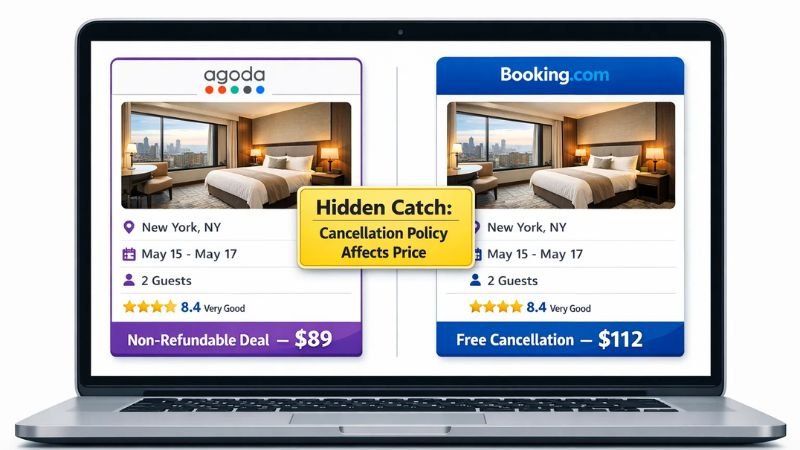
Have you ever found yourself with two browser tabs open, staring at the exact same hotel room, only to realise the hotel room prices are wildly different? You find a property you like on Booking.com and the price looks reasonable. But before confirming, you decide to check Agoda first. Same hotel, same room, same dates—yet one platform shows $89 while the other demands $112.
Travellers frequently encounter this massive pricing discrepancy across an online travel agency (OTA) network. To help you maximise your travel savings, this Agoda vs Booking comparison provides an objective evaluation of the structural algorithms, regional inventory variances, and exact booking methodologies of both platforms.
Agoda versus Booking.com: Where They Both Come From
To understand the Agoda versus Booking.com rivalry, you have to understand their DNA.
Agoda launched in Bangkok in 2005. It was the “local kid” who understood the chaotic, fragmented, and beautiful travel market of Southeast Asia. It got acquired by Booking Holdings in 2007, but it never lost its “Eastern” focus. Thailand, Indonesia, Vietnam, Japan, Malaysia — these are its home markets. For nearly two decades, Agoda reps have been walking into small guesthouses in Phuket and boutique hotels in Kyoto, negotiating deals that Western platforms simply can’t touch.
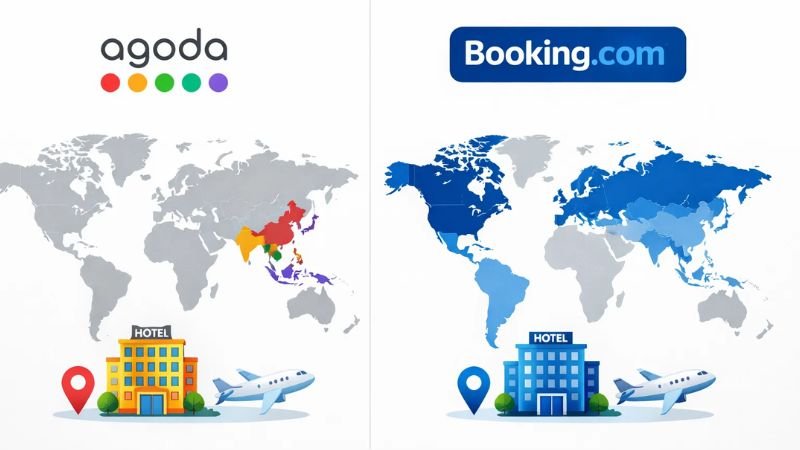
Booking.com, meanwhile, is the European titan. Headquartered in Amsterdam since 1996, it operates across 220+ countries with over 28 million listings. It isn’t just a hotel site; it’s a global infrastructure for everything from apartments in Berlin to treehouses in the Amazon.
The Corporate Secret: Both platforms are owned by the same parent company, Booking Holdings (which also owns Priceline and Kayak). They share a bank account, but they do not share a strategy. They negotiate their own hotel contracts separately and regularly price identical rooms differently. They are essentially two different stores owned by the same company, competing for your business.
To fully grasp how deep this corporate rivalry runs, one need only look at the numbers. According to the latest financial disclosures on Booking Holdings’ official investor relations platform, these two brands operate as distinct financial engines under the same umbrella. While this shared corporate backing gives both platforms massive global leverage, it also means they are actively trying to out-negotiate one another behind the scenes. Consequently, this fierce internal competition works entirely in your favour, directly driving the price variances you see as a consumer.
Agoda vs Booking: The Ultimate Comparison Table
Before we dive into the gritty details, let’s look at the high-level breakdown.
| Feature | Agoda | Booking.com |
| Primary Region | Asia & Southeast Asia | Europe & North America |
| Best For | Budget-conscious deal hunters | Travelers seeking flexibility |
| Payment Model | Mostly “Pay Now” (Merchant) | Mostly “Pay at Property” (Agency) |
| Loyalty Program | AgodaVIP & PointsMAX | Genius (Lifetime Tiers) |
| Price Transparency | Fees often added at checkout | Usually all-in pricing shown |
| Customer Support | Digital-heavy, can be slower | High-touch, 24/7 global support |
Evaluating Platform Pricing: Agoda vs Booking.com Cost Analysis
Yes, in Asia-Pacific travel, Agoda is cheaper than Booking.com.
Based on aggregated hotel search comparisons across Southeast Asian countries in 2025–2026, it was found that Agoda beats Booking.com on price roughly 60-65% of the time. We are talking about average savings of 8-15% per night. On a two-week honeymoon in Bali, one can put $200 back in the pocket.
This pricing discrepancy isn’t just a fluke; it’s backed up by broader industry data. Independent hospitality analytics and consumer studies regularly track how major online travel agencies price their rooms across regional corridors. For instance, comprehensive market deep dives published by travel intelligence leaders like Skift consistently show that Agoda maintains a tighter grip on wholesale margins within the Asia-Pacific network. Ultimately, this structural advantage allows them to undercut Western-facing platforms on a regular basis.
Why is Agoda cheaper than Booking.com for Asian hotels?
The root cause of this structural price difference comes down to the Merchant Model vs. Agency Model frameworks:
- Agoda (Merchant): They buy “blocks” of rooms in advance at a wholesale rate. Because they’ve already committed the money to the hotel, they have the power to mark it up (or down) as they see fit.
- Booking.com (Agency): They act as a middleman. The hotel sets the price, and Booking.com takes a commission.
This is why is agoda cheaper than booking.com for Asian properties specifically. Agoda has pre-bought inventory at negotiated rates, while Booking.com is passing through the hotel’s listed price.
The “Apples-to-Apples” Catch
However, the 26% price difference you saw in the intro often has a hidden catch. Booking.com defaults to showing free cancellation rates. Agoda defaults to showing non-refundable rates. When you force a like-for-like comparison, that massive gap often shrinks to a more modest 3-7%. It’s still a saving, but it’s not always the “slam dunk” it appears to be at first glance.
Agoda or Booking.com Better for Cancellations?
This is the section that changes a lot of people’s minds. If you are a “plan-as-you-go” traveler, the Agoda vs Booking debate ends here.
Booking.com is the king of flexibility. They built their empire on the “No Prepayment” model. You can book a room in Paris for six months from now, pay $0 today, and cancel for free up to 24 hours before you arrive. This is invaluable if you are applying for a visa or if your flight schedule is shaky.
Agoda is the king of the “Firm Plan.” To get those legendary low rates, you almost always have to pay upfront, and the “Special Deals” are almost always non-refundable. If you cancel, you lose your money.
So, is Agoda better than Booking.com? If you are 100% sure you are showing up, yes—take the Agoda discount. If you are a “maybe,” the extra $10 on Booking.com is essentially an insurance policy.
Agoda vs Booking: App Experience
In 2026, we book on our phones. Here, the platforms feel very different, and most Agoda versus Booking.com comparisons conveniently ignore.
The Agoda App Experience:
Agoda’s app is designed to trigger your “fear of missing out” (FOMO). You will see “Mobile-Only Deals,” “VIP Deals,” and “Flash Sales.” It can be a bit overwhelming, but the savings are real. In many cases, the price on the Agoda app is 5-10% lower than the price on the Agoda desktop site.
The Booking.com App Experience:
Booking’s app is cleaner and more professional. It doesn’t scream at you. It focuses on the “Genius” program. Once you are a Genius member, the discounted rates are simply baked into the search results. It feels less like a game and more like a tool.
Which Is Better Agoda or Booking.com, for Customer Support?
When a hotel in a foreign country tells you they don’t have your reservation, you don’t want a chatbot. You want a human.
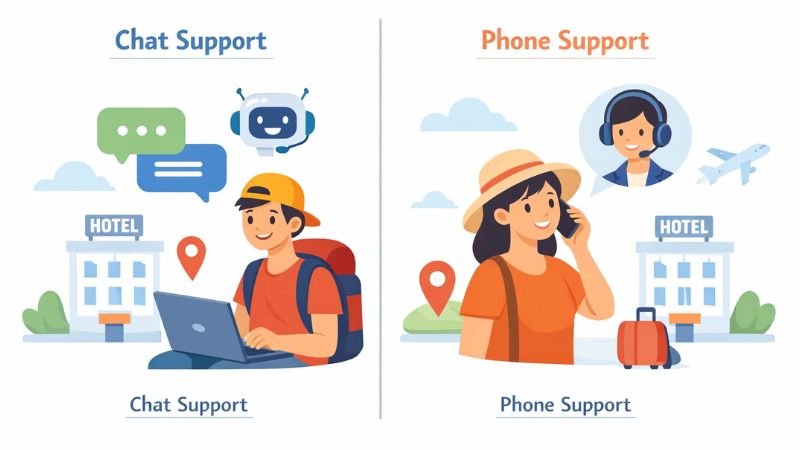
- Booking.com has a more accessible 24/7 phone support system. Because they have a massive presence in the West, their English-speaking support is top-tier.
- Agoda has leaned heavily into automated chat. While their regional teams in Asia are excellent at handling local disputes (like a language barrier with a Thai guesthouse), getting a human on a live phone line can feel like an Olympic sport.
So, in the Agoda vs Booking debate, for first-time international travelers, the peace of mind offered by Booking.com is usually the better choice because of its clearer policies and stronger support.
Final Verdict: How to Use Both Like a Pro
The Agoda versus Booking.com question does not have a single answer because they are built for different situations. You shouldn’t pick a side in the agoda vs booking war. You should use them as tools.
- The “Asia Rule”: If you are going to Asia, start on Agoda. Check the “App-Only” price.
- The “Flexibility Rule”: If you aren’t 100% sure about your dates, use Booking.com. The “Pay at Property” feature is a lifesaver.
- The “Genius” Factor: If you are a Level 3 Genius on Booking, check your discounted price there first. Sometimes it beats Agoda’s “Secret Deal.”

So, is Agoda or Booking.com better for your trip? It depends on your destination and flexibility needs. Agoda rewards the bold, budget-conscious traveler. Booking.com rewards the traveler who wants security, flexibility, and a clean interface.
Frequently Asked Questions (FAQ)
For Asia-Pacific travel, yes — Agoda wins on price roughly 60-65% of the time in Southeast Asia. For European hotels, Booking.com is usually cheaper. The real gap on a like-for-like basis is 3-7%, not the dramatic 25% that headline comparisons suggest.
Agoda uses a Merchant Model — it buys room inventory from Asian hotels in bulk at negotiated rates. Booking.com primarily passes through the hotel’s own listed price. Agoda’s deeper regional partnerships and app-exclusive pricing tiers also contribute to the gap.
Booking.com, clearly. It defaults to showing free cancellation rates, and most properties allow free cancellation up to 24-48 hours before check-in. Agoda defaults to non-refundable rates, so the lower price often comes with no cancellation option.
No. Booking.com has stronger inventory, better pricing, and more familiar payment terms for European hotels. Agoda’s price advantage is concentrated almost entirely in Asia-Pacific.
Yes — both are owned by Booking Holdings, which also owns Priceline and Kayak. Despite the shared ownership, they operate independently and negotiate hotel rates separately, which is why the same property often shows different prices on each platform.
Booking.com. The interface is cleaner, cancellation policies are easier to understand, and customer support is more accessible if something goes wrong. Agoda rewards experienced travellers who know how to navigate its pricing tiers and app-exclusive deals.
Last Updated on: July 10, 2026