Black Tea vs Green Tea: Differences, Benefits & Which Is Better for You?
- Food & Drink
 Neelam Rawat
- 0
- 34 minutes read
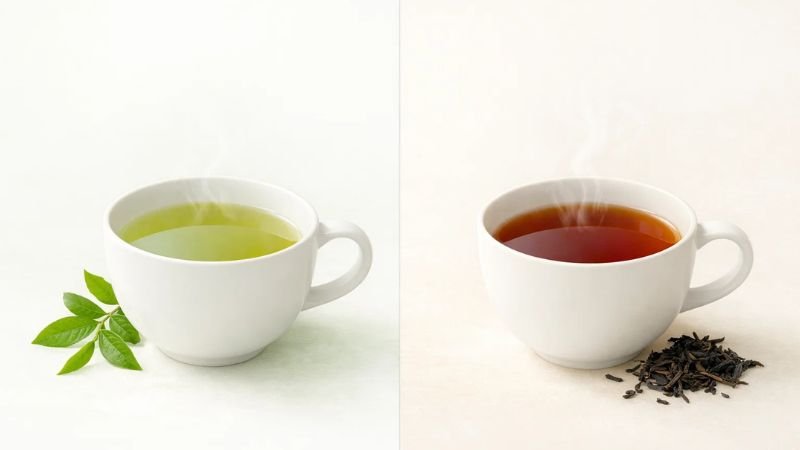
Black Tea vs Green Tea: These two teas come from the same plant. The same leaves, the same shrub – they start identical and end up completely different. That gap is created entirely by what happens after the leaf is plucked – a process called oxidation that changes everything from colour and flavour to antioxidant content and caffeine levels.
This guide covers the full picture: the difference between black tea and green tea, health benefits, caffeine, weight loss, hair, blood pressure, taste, and how to brew both properly.
Quick answer: If you’re wondering which is better black or green tea, green tea is better for fat loss and antioxidants, while black tea is better for energy and heart health. The main difference between black tea and green tea is oxidation. Green tea is minimally processed and rich in EGCG (epigallocatechin gallate), while black tea is fully oxidised – giving it a stronger flavour, higher caffeine, and different heart-supporting compounds. Neither is universally better. What’s better depends on your goal.
Difference Between Black Tea and Green Tea
Before diving deep, here’s the most important difference between black tea and green tea. This covers everything, so if you’re short on time, this table will point you in the right direction.
Black Tea vs Green Tea: Quick Comparison Table
| Factor | Green Tea | Black Tea |
| Source plant | Camellia sinensis | Camellia sinensis |
| Oxidation level | Minimal / None | Full |
| Cup colour | Pale yellow / light green | Deep amber / dark brown |
| Flavour profile | Grassy, floral, mild | Bold, malty, astringent |
| Caffeine per cup | 20–45mg | 40–70mg |
| L-theanine level | Higher ratio | Lower ratio |
| Primary antioxidants | EGCG, catechins | Theaflavins, thearubigins |
| Antioxidant quantity | Higher | Moderate (different type) |
| Best for energy | Calm, sustained focus | Fast, strong lift |
| Best for weight loss | Stronger direct evidence | Gut microbiome pathway |
| Heart health | Yes | Yes |
| Hair health | Follicle stimulation | DHT blocking (hair fall) |
| Stomach acidity | Lower (pH 7–10) | Higher (pH 4.9–5.5) |
| Best brew temperature | 70–80°C | 90–100°C |
| Kombucha brewing | Lighter, fresher result | Traditional, reliable |
| Pairs well with | Lemon, honey, plain | Milk, sugar, lemon |
Black Tea vs Green Tea: Origin & Processing Explained
Both teas come from the Camellia sinensis plant – an evergreen shrub grown across Asia for thousands of years. Green tea vs black tea leaves before processing look nearly identical. What separates them is entirely what happens in the processing facility after harvest.
Green tea leaves go into heat almost immediately – steamed in Japan or pan-fired in China – shutting down oxidation before it begins. The leaf stays chemically close to what it was on the plant, preserving its catechins in green tea intact.
Black tea leaves take a completely different route. After harvesting, they wither, get rolled to break down cell walls, and then sit exposed to air. That exposure triggers the tea oxidation process – the same basic chemistry as a sliced apple going brown. Tea processing methods diverge at exactly this point, and the result is two beverages with entirely different chemistry, colour, and health profiles.
Green tea vs black tea production also differs geographically – Japan and China dominate green tea, while India, Sri Lanka, and Kenya produce most of the world’s black tea.
Black Tea vs Green Tea Benefits: Antioxidants, Caffeine & Key Compounds
Green Tea vs Black Tea Antioxidants
When it comes to green tea vs black tea antioxidants, green tea carries more – but “more” doesn’t automatically mean “better for everything.”
Green tea’s edge comes from catechins in green tea surviving processing intact. The standout compound is EGCG (epigallocatechin gallate) – the most studied polyphenol in any tea, with research covering fat metabolism, oxidative cell damage, and inflammatory pathways. The antioxidants in tea, like EGCG, explain why green tea has dominated health conversations for two decades.
Black tea’s tea polyphenols – theaflavins – develop because of oxidation and carry their own clinically documented benefits: cholesterol reduction, cardiovascular protection, and anti-inflammatory effects. Green tea wins on antioxidant quantity. Black tea offers a different antioxidant class that science increasingly takes seriously.
Black Tea vs Green Tea Caffeine: Which Has More?
Does black tea have more caffeine than green tea? Yes. Green tea vs black tea caffeine levels differ because oxidation concentrates caffeine in the finished leaf. Green tea delivers 20–45mg per cup; black tea delivers 40–70mg. Both sit well below coffee’s 80–100mg, but green vs black tea caffeine content matters if you’re sensitive to stimulants or tracking daily intake.
Black Tea vs Green Tea L-Theanine, Tannins & pH
The black tea vs green tea L-theanine comparison is practically useful for daily drinkers. L-theanine softens caffeine’s edges without blunting alertness. Green tea has a higher L-theanine to caffeine ratio – which is why its energy feels steadier and calmer compared to black tea’s sharper, more direct lift.
Tea tannins are higher in black tea, creating that dry mouth-coating sensation and explaining why it pairs naturally with milk. And the pH of green tea vs black tea matters for sensitive stomachs – green tea sits near neutral at pH 7–10, while black tea is mildly acidic at pH 4.9–5.5.
Health Benefits of Black Tea vs Green Tea
Green tea is higher in antioxidants and better for weight loss, while black tea is better for energy and heart health. Both offer strong overall health benefits.
Heart Health
Black tea heart health research is consistent: three or more cups daily links to lower LDL cholesterol, better arterial flexibility, and reduced cardiovascular risk. Theaflavins interfere with cholesterol absorption and support blood vessel function. Green tea’s tea polyphenols reduce oxidative stress in arterial walls and dampen inflammation. Both teas support the heart, just through different pathways.
Weight Loss
Is black tea or green tea better for weight loss? Green tea leads with direct evidence. For black tea v green tea weight loss, EGCG combined with caffeine measurably increases fat oxidation and modestly boosts metabolic rate – particularly during exercise. Black tea works differently, acting as a prebiotic that shifts gut bacteria to reduce fat storage. Green tea has the stronger direct fat-burning evidence; black tea’s gut-mediated effect is real but slower.
Immunity & Anti-Inflammation
Both qualify as genuine anti-inflammatory tea. Regular drinkers consistently show lower C-reactive protein levels than non-drinkers. For tea for immune system support, green tea’s EGCG has shown antiviral properties in lab settings; black tea’s theaflavins offer similar protection against gut pathogens. Both teas support the gut microbiome – now widely understood as the central hub of immune function.
Focus & Energy
For the best tea for focus and energy, it depends on the task. Black tea’s higher caffeine delivers a faster, stronger lift – ideal for mornings or physical work. Green tea’s L-theanine and caffeine combination creates relaxed alertness – steadier concentration for writing, studying, or problem-solving. Choose based on what your next few hours actually require.
Blood Pressure & Hair Health
Black tea vs green tea blood pressure studies show both teas delivering modest, real reductions in systolic and diastolic readings through different mechanisms – black tea via improved endothelial function, green tea via EGCG’s effect on vessel walls. Neither replaces medication, but both are worthwhile daily habits.
For black tea vs green tea for hair: black tea blocks DHT – the hormone behind androgenic hair loss – and strengthens strands through its high tea tannin content. Green tea’s EGCG stimulates dermal papilla cells to support the hair growth cycle. Black tea is better established for reducing hair fall; green tea works better for follicle-level growth stimulation.
| Health Goal | Better Pick |
| Antioxidant protection | Green Tea |
| Heart health | Both |
| Weight loss | Green Tea |
| Morning energy | Black Tea |
| Calm focus | Green Tea |
| Blood pressure | Both |
| Hair fall / DHT control | Black Tea |
| Gut health | Both |
Common Mistakes That Kill the Benefits
Most tea guides focus entirely on benefits and skip the part that actually determines whether those benefits reach you. These five mistakes are more common than you’d think – and some of them directly cancel out the health value of every cup.
- Using boiling water for green tea is the single most damaging mistake. At 100°C, boiling water degrades catechins in green tea, including EGCG, within seconds, and produces harsh bitterness. Most people who dislike green tea have only ever had it brewed too hot. Fix: let your kettle cool 3–4 minutes or use a temperature-controlled kettle set to 70–80°C.
- Over-steeping black tea past five minutes lets tea tannins dominate aggressively – creating astringent bitterness no amount of milk can correct. If you want a stronger cup, use more leaves, not more time.
- Adding sugar routinely actively interferes with how your body processes tea polyphenols. Sugar triggers an insulin response that promotes inflammation – partially cancelling the anti-inflammatory tea benefits you’re after. Raw honey is a far more compatible alternative if you need sweetness.
- Drinking tea immediately after meals allows tea tannins to bind to dietary iron, reducing absorption meaningfully – especially relevant for low-iron or plant-based diets. Wait 30–45 minutes after eating before drinking either tea.
- Using old or improperly stored tea delivers significantly lower antioxidant content. Both teas need airtight, opaque containers away from heat and moisture. Green tea degrades faster than black tea once opened. If it smells like nothing, the beneficial compounds are likely already gone.
Black Tea vs Green Tea Taste: What’s the Difference?
How Do They Taste?
Green tea vs black tea taste is genuinely night and day. Green tea is delicate – grassy, sometimes floral, occasionally seaweed-like in Japanese varieties like sencha. Chinese green teas lean nuttier. Black tea is assertive – malty, earthy, with a natural astringency that holds up alongside milk or lemon. Assam teas are brisk and bold; Darjeeling teas carry a distinctive muscatel character. Preference is entirely personal; they serve different moods and moments.
How to Brew Both Properly?
A proper tea brewing guide improves your cup more than any brand upgrade will. Temperature is what most people consistently get wrong.
Green Tea: 70–80°C water, 1–3 minutes steeping, one teaspoon loose leaf per cup. Good loose leaf handles 2–3 re-steeps with later rounds often tasting smoother. Never use boiling water.
Black Tea: 90–100°C water, 3–5 minutes steeping, one teaspoon per cup. Pour water first, add milk after – adding milk before steeping cools the water and weakens the extraction.
Beyond the Cup: Kombucha & White Tea
Green Tea vs Black Tea for Kombucha
Green tea vs black tea kombucha divides home brewers genuinely. Traditional kombucha uses black tea – its tannin content feeds the SCOBY reliably and produces the characteristic tangy flavour. Green tea kombucha produces a lighter, fresher result with a different colour and taste profile. Blending both roughly half and half has become the popular middle ground – fermentation reliability from black tea, antioxidant richness from green.
How Does White Tea Compare?
White tea vs green tea is worth a brief note. White tea is the least processed of all – young buds simply dried, nothing more. The most delicate flavour, lowest caffeine, and very high antioxidant levels because the leaf chemistry is essentially untouched. For anyone who finds green tea too grassy or bitter, white tea is the natural next step.
Black Tea or Green Tea: Which Should You Choose?
The benefits of black tea vs green tea are real on both sides. This isn’t a case where one has been winning quietly while the other coasted on reputation.
- Choose green tea if you want maximum antioxidants in tea, are focused on weight management, are caffeine-sensitive, need clean cognitive focus, or have a sensitive stomach.
- Choose black tea if you need a strong morning energy lift, are prioritising heart health and cholesterol, enjoy bold flavour with milk, are dealing with hair thinning, or are brewing kombucha.
And if neither fits neatly – drink both. Morning green tea for focus, afternoon black tea for energy. The combined green tea vs black tea health benefits profile covers more ground than either alone.
The Bottom Line
Black tea vs green tea was never a competition. Both come from the same Camellia sinensis plant, both are loaded with tea polyphenols, and both deliver real, research-backed benefits – just through different pathways.
Green tea leads to antioxidants in tea and weight support. Black tea leads in energy, bold flavour, and cardiovascular benefits. Pick based on your goal, brew it at the right temperature, skip the sugar, and avoid the common mistakes that quietly cancel out everything you’re drinking it for.
Frequently Asked Questions
Yes. Black tea delivers roughly 40–70mg per cup. Green tea sits at 20–45mg. The gap comes from oxidation, concentrating caffeine in the finished leaf. Both are substantially lighter than coffee.
Green tea has stronger direct research support – EGCG increases fat oxidation, particularly during exercise. Black tea works through gut bacteria changes that reduce fat storage. Both contribute, just through different mechanisms.
Green tea: approximately pH 7–10, close to neutral. Black tea: approximately pH 4.9–5.5, mildly acidic. People with reflux or stomach sensitivity generally find green tea easier to tolerate, especially on an empty stomach.
Black tea is better established for reducing hair fall and blocking DHT at the scalp. Green tea’s EGCG works at the follicle level to support hair growth cycles. Using both – one topically, one internally – makes practical sense.
Yes, with consistent consumption over weeks rather than days. Multiple clinical trials show modest reductions in both systolic and diastolic pressure. It supports – but doesn’t replace – prescribed cardiovascular treatment.
EGCG (epigallocatechin gallate) is the primary bioactive catechin in tea, found in high concentrations in green tea. During oxidation, black tea’s EGCG converts into theaflavins – different compounds, different benefits, but genuinely useful in their own right.
Before processing, green tea leaves and black tea leaves are chemically identical. After processing, green tea leaves retain their catechins and green colour through minimal oxidation. Black tea leaves turn dark and develop an entirely different compound profile through full oxidation.
Black tea is better for physical energy and fast alertness. Green tea is better for sustained, calm cognitive focus – especially for work or study that requires attention over several hours rather than a quick boost.