Top 7 Daily Supplements for Energy & Wellness in 2026 (Customer-Rated)
- Health
 Editorial Team
- 0
- 26 minutes read
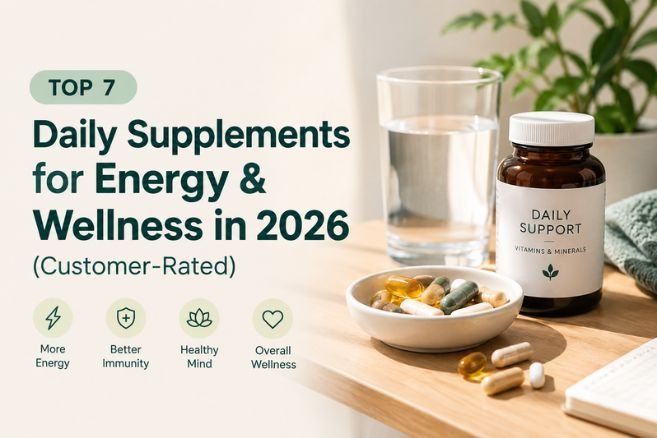
Do you feel exhausted by 2 or 3 pm even after sleeping soundly the night before? But daily supplements utilize the small spaces our hectic, busy diets leave behind to quietly help fill those gaps in your nutritional content. The core vitamins & minerals that the vast majority of people will start with are pretty darn simple: a multi, magnesium, omega-3, vitamin D3 (with K2), collagen (which can be protein powder as well), ashwagandha, and finally melatonin.
To put it another way, it’s quite easy and, at the same time, extremely daunting. When you enter a store, the endless shelves give an impression of a vast choice, making deciding on the best daily health supplements practically impossible or at least very difficult. Skipping breakfast, eating the same three meals on a repeating basis, or working late hours without a break can slowly lead to nutrient deficiencies and declining health in subtle ways, which might surface only after quite a while.
This is a very simple, step-by-step guide. Here you’ll find natural supplements boosting energy that come recommended by real people, clearly stated dosage instructions, and safety tips. By the end, you’ll know which essential daily supplements for energy and wellbeing are top-rated, and which are definitely worth incorporating into your own personal regime.
Nutrient gaps build up quietly when life gets busy
Picture a normal Tuesday. You grab a coffee instead of breakfast, eat lunch at your desk, and order dinner because you’re too tired to cook. Nothing dramatic happened, yet your plate barely met a leafy green, a piece of oily fish, or a handful of nuts. Do that for a few weeks and the small shortfalls stack up.
That’s where daily supplements earn their place. They don’t replace real food. They back it up, like a spare key you hope you won’t need but are glad to own. Nutrition surveys in many countries keep pointing at the same names: vitamin D, magnesium, and omega-3 fats. Your own needs depend on your age, diet, sun exposure, and health, so a simple blood test with your doctor is the only way to know for sure.
| Everyday complaint | Nutrient people often look into | Food sources worth adding |
| Low energy by mid-afternoon | Magnesium, B vitamins | Nuts, seeds, whole grains, leafy greens |
| Trouble winding down at night | Magnesium, melatonin (short term) | Pumpkin seeds, oats, legumes |
| Stiff or achy joints | Omega-3, collagen | Oily fish, walnuts, bone broth |
| Catching every cold going around | Vitamin D3, vitamin C | Eggs, fortified foods, citrus, peppers |
| Dull skin or brittle nails | Collagen, vitamin C | Berries, citrus fruits, fish |
Treat this table as a list of questions to bring to your doctor, not a diagnosis.
High-potency organic dietary supplements start with the label
Before we get to the list, a quick word on shopping for daily supplements. Big claims on the front of a bottle mean very little. The back tells the real story, and it only takes a minute to read.
| What to check | Why it matters | What good looks like |
| Third-party lab testing | Confirms the capsule holds what the label says | Testing is mentioned openly |
| Ingredient form | Some forms absorb better than others | Named forms, like magnesium citrate |
| Dose per serving | Lets you compare products fairly | Clear mg per capsule and capsules per day |
| Sourcing | Cleaner, more traceable ingredients | Non-GMO or organic where it applies |
| Diet fit | Saves you from reading every line twice | Vegan, gluten-free, sugar-free marked clearly |
| Supply size | Cost per day beats cost per bottle | 4-month or 12-month options |
Use this checklist for every one of your daily supplements, not just the ones in this guide.
This is why a brand like WeightWorld is worth a look. It shares doses openly, talks about third-party lab testing and non-GMO sourcing, and sells long-supply bottles. A 240-capsule bottle of magnesium citrate, for example, lasts about four months at two capsules a day, which keeps daily supplements easy on your budget.
Seven picks that cover most everyday needs
You don’t need all seven daily supplements on this list. Read through, pick the two or three that match how you actually feel, and start there.
1. A multivitamin covers the everyday basics
Of all the daily supplements on the shelf, a multivitamin acts like an insurance policy. It won’t fix a poor diet, but it plugs small holes on the days you eat badly. When you hunt for the best multivitamin complex for daily health routine, look for well-absorbed forms such as vitamin D3 and methylfolate, and make sure the label shows real amounts instead of a vague “proprietary blend”. Take it with breakfast, because vitamins A, D, E, and K absorb better alongside food. Gummies suit you if capsules are a struggle, though they can carry a little sugar.
2. Magnesium supports muscles, stress balance, and steady energy
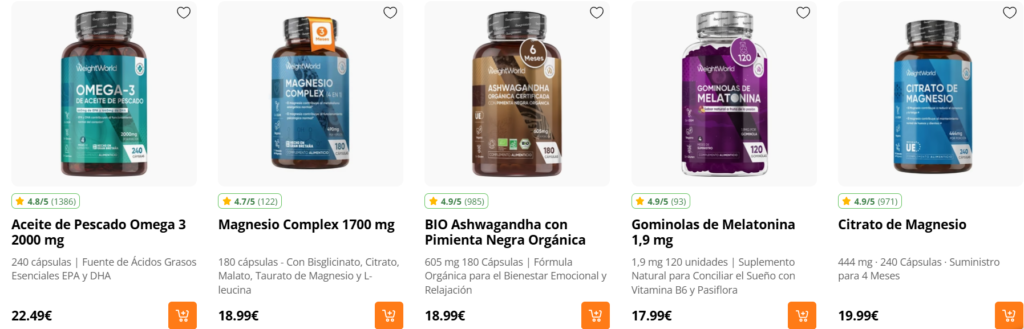
Magnesium is one of the daily supplements people reach for first, and it shows up in hundreds of processes in your body. European health authorities allow it to be linked with normal muscle function, normal psychological function, and less tiredness and fatigue. WeightWorld’s Magnesium Citrate gives you 444 mg a day from two capsules, while its Magnesio Complex 1700 mg blends bisglycinate, citrate, malate, and taurate in one bottle. Customers rate them 4.9 and 4.7 out of 5 on the store.
One buyer wrote that cramps faded after a short spell on magnesium citrate and collagen. That’s one person’s story, not a promise. Higher doses can loosen your stools, so start low and build up.
3. Omega-3 looks after your heart, brain, and joints
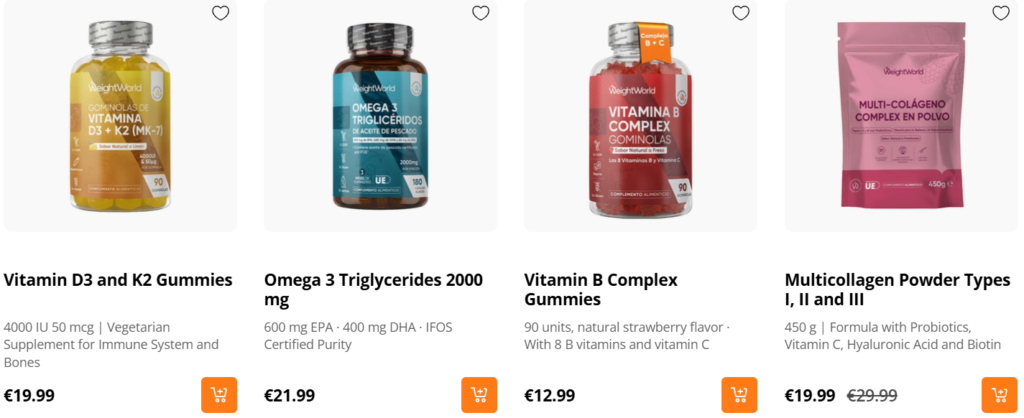
Omega-3 is one of those daily supplements that food alone rarely covers. Oily fish is the classic source, but plenty of us eat salmon once a month, if that. EPA and DHA, the two main omega-3 fats, are linked with normal heart function and normal brain function, and European authorities point to about 250 mg of EPA and DHA a day for the heart. Softgels with around 2000 mg of fish oil are common, so check the EPA and DHA amounts, not just the big number on the front.
This is where omega-3 and magnesium complex benefits overlap nicely. One backs your heart and brain, the other your muscles and nerves, and plenty of people take them side by side with a meal. If you’re vegan, algae-based omega-3 does the same job.
4. Ashwagandha helps you feel steadier when life gets loud
Ashwagandha is an adaptogen, a plant used for centuries in Ayurveda for stress and vitality. It’s one of the few daily supplements built around stress. Small human studies suggest it may ease perceived stress and improve sleep quality, but the research is still limited, so see it as support, not a cure. WeightWorld’s BIO Ashwagandha with organic black pepper comes in 605 mg capsules and holds a 4.9 out of 5 rating from 985 reviews, the highest volume of praise on the store. Skip it if you’re pregnant, breastfeeding, or have a thyroid condition, and ask your doctor first if you take regular medication.
5. Vitamin D3 with K2 backs your bones and immune defence
Most of us assume the sun handles vitamin D, then spend winter indoors under a jumper. D3 contributes to normal immune function, normal bones, and normal muscle function. K2 works alongside it and contributes to normal bone maintenance. If you want to boost your immune system naturally with vitamins, pair D3 with vitamin C-rich foods, decent sleep, and regular movement.
Among daily supplements, this pair earns extra points in winter. Take it with your fattiest meal, so it absorbs properly. One important note: vitamin K interacts with blood thinners such as warfarin, so speak to your doctor before you start.
6. Collagen supports skin, hair, and joint comfort
Collagen is one of the daily supplements that rewards patience. Your body makes its own collagen, but production slows as you get older. Studies on hydrolysed collagen suggest modest gains in skin hydration and elasticity for some people after eight to twelve weeks. So patience matters more than dosage here. Add vitamin C, since your body needs it to build collagen, and stay realistic. It’s a slow-burn supplement, not an overnight glow-up.
7. Melatonin helps you wind down when your body clock drifts
Of all daily supplements, melatonin is the one to treat as short-term. Your body releases melatonin as it gets dark. A low dose, like the 1.9 mg Melatonin Gummies with vitamin B6 and passionflower at WeightWorld (4.9 out of 5, 93 reviews), suits shift workers, jet-lagged travellers, and anyone whose sleep schedule has slipped. Take it 30 to 60 minutes before bed, keep it short-term, and don’t drive afterwards. Check with your doctor if you’re pregnant, on medication, or buying for a teenager.
Customer ratings show which products people trust most
Ratings won’t tell you everything, but thousands of buyers is a decent reality check when you’re choosing daily supplements online. Across Trustpilot, WeightWorld sits at around 4.4 to 4.5 out of 5. Reviewers like the fast delivery and value for money. Some mention courier delays, and one noted that certain magnesium products didn’t ship to the Canary Islands, Ceuta, or Melilla. It’s worth knowing both sides before you order.
| Supplement | Product and dose | Store rating | Reviews |
| Magnesium | Citrate 444 mg, 240 capsules | 4.9 / 5 | 971 |
| Ashwagandha | BIO with black pepper, 605 mg, 180 capsules | 4.9 / 5 | 985 |
| Melatonin | Gummies 1.9 mg, 120 units | 4.9 / 5 | 93 |
| Magnesium | Magnesio Complex 1700 mg, 180 capsules | 4.7 / 5 | 122 |
Good daily supplements earn their ratings over time, so notice the review counts. A 4.9 from 93 people tells you less than a 4.9 from nearly a thousand, so weigh both numbers.
A simple routine makes the habit stick
The best plan is the one you’ll actually follow. Anchor each product to something you already do, like breakfast or brushing your teeth. Add one new item every two weeks, so you can tell what’s helping and what isn’t. Building your daily supplements slowly also makes it easier to spot side effects early. Keep your daily supplements somewhere visible, like next to the kettle, and you’ll remember them.
| Time of day | What to take | Handy tip |
| Breakfast | Multivitamin, vitamin D3 with K2, omega-3 | Take them with a meal that has some fat |
| Afternoon | Collagen with a vitamin C-rich snack | Pair it with fruit or a smoothie |
| Evening | Magnesium and ashwagandha if you use it | Follow the label dose and timing |
| Before bed | Melatonin, only when needed | 30 to 60 minutes before lights out |
Safety notes worth reading before you start
Supplements are not medicines, and more is not better. Stick to the label dose for all your daily supplements, and don’t stack products that overlap. If you’re pregnant, breastfeeding, taking prescription medication, or managing a health condition, talk to your doctor or pharmacist first. Results vary from person to person, and if something makes you feel unwell, stop taking it. These daily supplements work best alongside a decent diet, sleep, and movement.
A simple start to natural supplements for vitality
You don’t have to overhaul your life on Monday. Pick one or two daily supplements from this list, read the label properly, and give them a few weeks. Small, steady habits beat a cupboard full of daily supplements you forget about. If you’d like a nudge in the right direction, the wellness quiz on WeightWorld takes a couple of minutes and points you toward products that fit your routine. Start small, stay consistent, and let your body tell you what’s working.
Frequently asked questions
The best daily supplements for beginners are a multivitamin, vitamin D3 with K2, omega-3, and magnesium. Start with one or two, follow the label dose, and add more gradually so you can notice what helps and spot side effects early.
Choose a magnesium supplement that names its form, such as citrate or bisglycinate, lists the milligrams per serving, and mentions third-party lab testing. Citrate suits everyday use and is easy to find, while blends combine several forms in one bottle.
Yes, most healthy adults can take magnesium and omega-3 together, ideally with a meal. They support different functions, so they don’t compete. If you take regular prescription medication or have a health condition, check with your doctor or pharmacist first.
Most daily supplements take a few weeks to show a difference. Magnesium and melatonin may feel different within days, collagen usually needs eight to twelve weeks, and vitamin D levels change slowly over months. Results vary from person to person.
Yes, most healthy adults can safely take supplements daily at the label dose, but more is not better. Avoid stacking overlapping products, and speak to your doctor first if you are pregnant, breastfeeding, on medication, or managing a health condition
Note: counts are exact-phrase, case-insensitive. Longer keyword phrases that contain the seed (for example, “best daily supplements for health”) also count toward the seed total. No H2 or H3 contains the seed keyword.
Last Updated on: September 30, 2026