Coke Zero vs Diet Coke: What’s the Real Difference? (Taste, Ingredients & Health)
- Food & Drink
 Neelam Rawat
- 0
- 30 minutes read
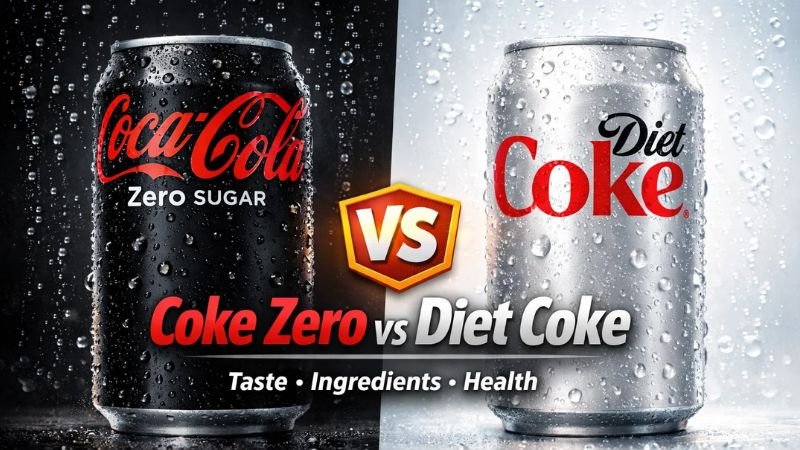
Coke Zero vs Diet Coke is one of those debates that sounds simple on the surface — they’re both calorie-free, both made by Coca-Cola, both designed for people who want the fizz without the sugar. So why are they different products?
The short answer: The difference between Coke Zero and Diet Coke comes down to sweeteners, taste, and formulation. Coke Zero Sugar uses aspartame + acesulfame potassium to mimic regular Coca-Cola, while Diet Coke uses only aspartame and has a lighter, sharper flavour. They use different sweetener blends, have different formulas, taste noticeably different, and were created for entirely different audiences.
Quick answer: Coke Zero Sugar uses a combination of aspartame and acesulfame potassium and is designed to taste like the original Coca-Cola. Diet Coke uses only aspartame and has its own distinct, lighter flavour. Both have zero calories and zero sugar — but that’s roughly where the similarities end.
Difference Between Coke Zero and Diet Coke (Simple Breakdown)
Coca Cola Zero vs Diet Coke: Diet Coke launched in 1982 and was Coca-Cola’s first major sugar-free product. It wasn’t built to taste like regular Coke — it was deliberately given its own identity, targeted at the diet-conscious crowd of the era, particularly women. It became a cultural icon and one of the bestselling soft drinks in the world.
Coke Zero arrived two decades later in 2005, rebranded as Coke Zero Sugar in 2017. The goal was completely different: create a zero-calorie drink that tastes as close to the original Coca-Cola as possible, targeting men who were put off by the “diet” label. Coke Zero Sugar vs Diet Coke, at its core, is a story of two different briefs given to two different product teams.
Today, Coke Zero Sugar is growing faster in sales globally, particularly among younger, health-conscious consumers who want fewer calories without compromising on taste.
Coke Zero vs Diet Coke Ingredients Compared
This is where things get genuinely interesting — and where most articles get lazy. Here’s a full side-by-side breakdown.
Coke Zero Sugar ingredients: Carbonated water, colour (caramel E150d), phosphoric acid, sweeteners (aspartame, acesulfame K), natural flavourings including caffeine, acidity regulator (sodium citrate).
Diet Coke ingredients: Carbonated water, colour (caramel E150d), sweeteners (aspartame), natural flavourings including caffeine, phosphoric acid, citric acid, acidity regulator (sodium citrate).
At first glance, they look nearly identical, but here’s what separates diet coke vs coke zero ingredients :
| Ingredient | Coke Zero Sugar | Diet Coke |
| Aspartame | Yes | Yes |
| Acesulfame potassium (Ace-K) | Yes | No |
| Citric acid | No | Yes |
| Sodium citrate | Yes | Yes |
| Phosphoric acid | Yes | Yes |
The biggest functional difference between Coke Zero and Diet Coke is that Coke Zero uses both aspartame and acesulfame potassium together, while Diet Coke relies on aspartame alone. This dual-sweetener approach is what gives Coke Zero its fuller, rounder taste — closer to the real thing.
Sweeteners: Aspartame vs Aspartame + Ace-K
Aspartame is around 200 times sweeter than sugar, but it can leave a slightly bitter aftertaste at high concentrations. Ace-K — short for acesulfame potassium — is used alongside aspartame in Coke Zero to balance that edge and create a more natural sweetness curve. This is a well-established formulation trick in food science.
Coke zero vs diet coke sweetener profiles explain nearly everything about why they taste so different despite both being “diet” sodas.
Preservatives, Acids, and Other Additives
Diet Coke contains citric acid, which gives it a slightly sharper, more acidic finish. Coke Zero doesn’t have citric acid, which contributes to its smoother, less tart aftertaste. Neither drink contains preservatives in most markets — carbonation and the low pH do the preservation work naturally.
Calories, Sugar, and Nutrition Facts
Let’s clear this up with actual numbers. Here are the coke zero vs diet coke nutrition facts per 355ml (12 fl oz) can:
| Nutrient | Coke Zero Sugar | Diet Coke |
| Calories | 0–1 kcal | 0–1 kcal |
| Total sugar | 0g | 0g |
| Total carbohydrates | 0g | 0g |
| Sodium | ~40mg | ~40mg |
| Caffeine | ~34mg | ~46mg |
For anyone counting calories, both drinks are essentially identical — zero sugar, zero meaningful calories. The coke zero vs diet coke calories debate is essentially a tie.
Where it matters is the caffeine column. Diet Coke has noticeably more caffeine — something we’ll come to in the next section.
For keto dieters: both drinks are technically keto-friendly since they contain no carbohydrates. However, some research suggests artificial sweeteners may trigger an insulin response in certain individuals. If you’re a strict keto, both can be consumed, though sparingly. Diet Coke for keto tends to get slightly more search interest, but Coke Zero is equally suitable given the identical carb count.
Caffeine Content: Which Has More?
Here’s a quick, direct answer because this question deserves one:
Diet Coke contains approximately 46mg of caffeine per 355ml can. Coke Zero Sugar contains approximately 34mg per 355ml can.
That makes Diet Coke around 35% higher in caffeine than Coke Zero. If you’re sensitive to caffeine — or if you’re choosing between the two later in the day — coke zero vs diet coke caffeine is a real practical distinction.
Neither drink is a particularly high-caffeine option compared to coffee (which ranges from 80–200mg per cup), but the gap is wide enough to notice if you’re drinking two or three cans a day.
Taste Comparison: Which One Tastes Better?
This is where most people have the strongest opinions.
Coke Zero Sugar was engineered to taste like regular full-sugar Coca-Cola. Most blind taste tests confirm it comes remarkably close — the dual sweetener blend smooths out the artificial aftertaste that plagues many diet sodas. The mouthfeel is slightly fuller, the finish is rounder, and the overall experience is closer to what you’d get from an ice-cold regular Coke.
Diet Coke has a completely different, intentional flavour profile. It’s lighter, more acidic, and slightly more tart thanks to the citric acid. Long-time Diet Coke drinkers often prefer it precisely because it doesn’t try to be regular Coke — it’s its own thing, and they’ve grown up with it.
In terms of coke zero vs diet coke taste, the clearest way to frame it is this:
- If you miss the taste of regular Coke but want zero calories, Coke Zero Sugar is the closest match.
- If you prefer a lighter, crisper, more distinct flavour, Diet Coke is the one for you.
When it comes to coke zero vs diet coke which is better, there’s genuinely no universal answer — it depends entirely on what you’re looking for. Global sales data does show Coke Zero Sugar growing faster year on year, suggesting taste preferences are shifting toward the fuller-flavoured option. But Diet Coke still outsells it in several markets, particularly the UK, thanks to decades of brand loyalty.
Health Comparison: Is Coke Zero Bad for You?
This is the section that matters most for a lot of readers, and it deserves a genuinely honest answer rather than a panic-driven headline or a corporate non-answer.
Is Coke Zero bad for you? Not in the way most people fear — but it’s not without caveats.
Both drinks are zero-calorie and zero-sugar, which means they don’t cause the blood sugar spike that regular Coke does. For people managing calorie intake or blood sugar, both are significantly better options than their full-sugar counterparts.
The health conversation mainly circles around three areas:
Are Artificial Sweeteners Safe?
Diet Coke vs Coke Zero Sugar: Aspartame — used in both drinks — has been studied extensively for decades. The European Food Safety Authority, the FDA, and the WHO have all concluded it is safe at typical consumption levels. The acceptable daily intake (ADI) for aspartame is 40mg per kg of body weight in the EU — a 70kg adult would need to drink roughly 14 cans of Diet Coke per day, every day, to exceed that threshold.
In 2023, the WHO’s IARC classified aspartame as “possibly carcinogenic to humans” (Group 2B). This sounds alarming, but the Group 2B classification also includes pickled vegetables and aloe vera. The simultaneous WHO risk assessment concluded that the evidence is not sufficient to change the ADI. Ace-K, used in Coke Zero Sugar, also has a strong safety record at typical doses.
The science doesn’t support outright fear. But it’s reasonable to be thoughtful about how much you’re consuming overall. Coke zero vs diet coke healthier isn’t a question with a clean binary answer.
Coke Zero or Diet Coke: Which Is Better for Weight Loss or Keto?
Both drinks have zero calories and zero carbs, so neither will break a calorie deficit or knock you out of ketosis on paper. Some research suggests that sweet-tasting drinks — even calorie-free ones — may maintain sweet cravings over time, which could make it harder to reduce overall sugar desire. This is a behavioural consideration rather than a metabolic one.
For anyone eating keto, both Coke Zero Sugar and Diet Coke for keto are considered safe choices. Just monitor your own response to them.
Which Is Better for Diabetics?
Neither drink causes a direct blood sugar response in most people, making both preferable to regular soft drinks for people managing type 2 diabetes. However, individual responses to sweeteners vary, and a small subset of people report blood sugar fluctuations with regular artificial sweetener consumption. If you’re diabetic and unsure, the safest bet is to check with your doctor or monitor your glucose response personally.
The zero sugar vs diet coke distinction matters less here than the shared absence of actual sugar in both.
Coke Zero vs Diet Coke: Master Comparison Table
Here are coke zero vs diet coke nutrition facts in one place. Bookmark this if you need a quick reference.
| Category | Coke Zero Sugar | Diet Coke |
| Launched | 2005 (rebrand 2017) | 1982 |
| Calories | 0 kcal | 0 kcal |
| Sugar | 0g | 0g |
| Sweeteners | Aspartame + Ace-K | Aspartame only |
| Caffeine (355ml) | ~34mg | ~46mg |
| Citric acid | No | Yes |
| Taste profile | Closer to regular Coke | Lighter, more tart |
| Best for | Those missing original Coke | Those who want a distinct flavour |
| Keto-friendly | Yes | Yes |
| Diabetic-friendly | Generally yes | Generally yes |
The difference between Coke Zero and Diet Coke really comes down to formula and intention. Coca cola zero vs diet coke — one is a flavour replacement, the other is a category entirely its own.
Coke Zero vs Diet Coke: Which Should You Choose?
If you’re switching from regular Coke and want the closest possible substitute without the calories, Coke Zero Sugar wins by a clear margin. The dual-sweetener formula genuinely does a better job of replicating the full-sugar experience.
If you’re a long-time Diet Coke drinker, or you prefer something lighter and sharper, there’s no reason to switch. Diet Coke has a distinct character that’s earned genuine loyalty over four decades.
If caffeine sensitivity matters to you, Coke Zero Sugar is the lower-caffeine option — something worth knowing if you’re drinking in the afternoon or evening.
For keto, weight loss, or diabetes management, both are functionally equivalent — the coke zero vs diet coke calories and carb count are identical. Make your choice based on taste, not nutrition labels.
Considering coke vs diet coke vs coke zero as a three-way comparison? Regular Coke has 39g of sugar per can and 140 calories — both Diet Coke and Coke Zero Sugar are substantially better choices if sugar and calorie intake is your concern.
Frequently Asked Questions
No. While both are zero-calorie, zero-sugar soft drinks made by Coca-Cola, they have different formulas, different sweetener blends, and different flavour profiles. Coke Zero Sugar is designed to taste like the original Coca-Cola; Diet Coke has its own distinct taste.
Diet Coke has more caffeine — approximately 46mg per 355ml can compared to coke zero vs diet coke caffeine of ~34mg. If you’re caffeine-sensitive, Coke Zero is the better option.
Neither is significantly healthier than the other. Both are zero-calorie and zero-sugar. Coke zero vs diet coke healthier is largely a tie — both carry the same general considerations around artificial sweetener consumption.
Generally, yes — neither drink contains sugar, and neither triggers a direct blood glucose spike for most people. Always consult your doctor if you’re managing blood sugar closely.
Both are keto-friendly with zero carbs. Diet Coke for keto and Coke Zero Sugar for keto are equally suitable. Choose based on your taste preference.
Yes. Coke Zero Sugar contains both aspartame and acesulfame potassium (Ace-K). Diet Coke contains only aspartame.
Coke No Sugar vs Coke Zero vs Diet Coke is a common question. In most markets, Coke No Sugar is simply the regional name for Coke Zero Sugar — the formula is essentially the same. Diet Coke remains a separate product with a different recipe in all markets.
Neither Coke Zero nor Diet Coke directly causes weight gain, as both contain zero calories and zero sugar. However, some studies suggest artificial sweeteners may increase sweet cravings over time, potentially leading to overeating. Moderation is key.