Kaspersky BE: Choosing the Right Cybersecurity Solution in Belgium — Start with Kaspersky
- Software
 Editorial Team
- 0
- 25 minutes read

In an era where digital transformation is the backbone of the Belgian economy, ensuring robust Cybersecurity Belgium has moved from a technical luxury to a foundational business requirement. As we navigate through 2026, the complexity of the digital landscape in Brussels, Antwerp, and beyond has reached a tipping point, making expert-led protection more critical than ever.

Cybersecurity in Belgium Is No Longer Optional
Belgium is one of the most digitally interconnected nations in Europe. But that connectivity is a double-edged sword. Whether you’re a logistics firm in the Port of Antwerp or a niche tech startup in Ghent, you completely depend on a stable, secure internet.
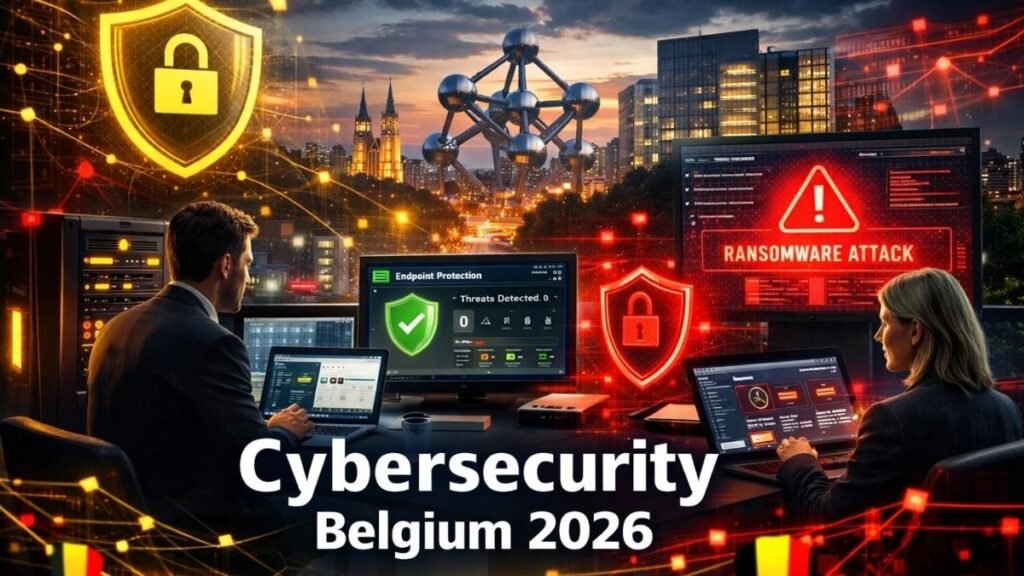
However, the number of successful breaches hitting Belgian organizations has climbed steadily over the last few years. It’s not just the “big guys” getting hit anymore. Attackers know that Belgian SMEs are often the softest entry point into larger supply chains. Between the rising tide of Internet Security Threats and the tightening grip of EU regulations, “winging it” with weak cybersecurity is no longer a viable business strategy. It’s a liability.
The Cyber Threat Landscape Facing Belgian Businesses in 2026
The internet security threats landscape keeps changing. Today’s threats are industrialized, efficient, and often powered by the same AI tools we use for productivity.
Ransomware Attacks on Belgian Organisations
Ransomware hasn’t gone away; it has just become more personal. In 2026, attackers don’t just lock your files; they steal them first and threaten to leak your client’s private data to the Belgian press unless you pay. For a local business, the cost of the ransom is often dwarfed by the cost of downtime and the permanent stain on your brand’s name. Robust Ransomware Protection is about more than just avoiding encrypted files. It is the only thing standing between a normal Tuesday and a total company shutdown.
AI-Powered Phishing Is the New Normal
While everyone’s worried about ransomware, phishing attacks have become absolutely terrifying. Attackers are using AI to write phishing emails that sound exactly like your colleague, your supplier, or your CEO. They study how your company communicates, they know who talks to whom, and they understand your business cycles. Then they strike at exactly the right moment with a message that looks completely legitimate.
Today, Phishing Protection has to deal with AI that can mimic your CEO’s writing style perfectly in Dutch or French. These attackers use deepfake technology to create voice notes that sound exactly like your CFO. These aren’t just Internet Security Threats; they are sophisticated social engineering campaigns that bypass traditional spam filters with ease.
Why Traditional Antivirus Is No Longer Enough
The old-school way of doing things—installing a basic antivirus and hoping for the best—is officially dead. Legacy antivirus for business relies on “signatures,” which are essentially digital mugshots of known viruses.
The problem? Most modern attacks don’t have a mugshot yet. They are “fileless” or “zero-day” threats that move through your system without leaving a trace. This is why the industry has shifted toward Endpoint Protection Software. Instead of looking for a specific file, it looks for behavior. If an employee’s computer suddenly starts behaving like a hacker’s workstation, the system shuts it down instantly.
Endpoint Protection vs Antivirus – What Belgian Businesses Actually Need
If you’re still weighing the merits of Endpoint Protection vs Antivirus, think of it this way: Antivirus is a lock on your front door. Endpoint Protection Software is a 24/7 security team inside the building, monitoring every hallway.
Comparison: Which One Wins for Your Business?
| Feature | Traditional Antivirus | Endpoint Protection Software |
| Detection Logic | Known threats only | Behavioral (AI-driven) |
| Response | Just deletes the file | Isolates the whole device |
| AI-driven threat defense | No | Yes |
| Ransomware Protection | Basic/Reactive | Advanced & Proactive |
| Visibility | None (Silent) | Full (Central Dashboard) |
| NIS2 Readiness | Highly Unlikely | NIS2 Compliance Belgium Ready |
For any Belgian business with more than a handful of employees, the choice is clear. You need the visibility and control that only a modern endpoint protection software can provide.
See the difference? Traditional antivirus is playing defense with last year’s playbook. Endpoint protection software is actually trying to stay ahead of the curve.
What really matters for Belgian businesses: the behavioral analysis catches ransomware before your files get encrypted. The machine learning spots those AI-generated phishing attempts that slide past normal filters. You get centralized management so your IT team can see what’s happening across every laptop, server, and mobile device—whether people are working from your Brussels office or their living room in Ghent.
And here’s the NIS2 angle: modern endpoint protection software is built with compliance in mind. It’s not an afterthought. Whether you need audit logs or incident reporting, everything is built in. Traditional antivirus makes you bolt compliance features on later, which is expensive and messy.
Choosing the Right IT Security Solutions for Belgian Businesses
When you’re browsing IT security solutions in 2026, here’s what Belgian companies should actually look for in 2026:
- Centralised Management: You shouldn’t have to check 50 different laptops. You need one screen that shows everything.
- Real-time Intelligence: Your antivirus for business needs to be learning about new threats constantly, not waiting for monthly updates. The best solutions tap into global networks, seeing what’s hitting companies worldwide. When a new attack starts hitting businesses in Germany or France, you want your system already preparing for it before it reaches Belgium.
- Compliance Readiness: Compliance readiness isn’t optional anymore with NIS2 kicking in. You need IT security solutions that already log everything regulators want to see, and the software should do the heavy lifting for your audits.
- Scalability: Scalability matters even if you’re not planning to grow. Maybe you’re 50 employees now, but what about in two years? Your IT security solution should grow smoothly with you, not require a complete replacement when you hit 100 or 500 employees.
This is where Kaspersky Business Security shines—it scales from the local shop to the enterprise without losing that “user-first” feel.
Meeting NIS2 Requirements in Belgium with Kaspersky
Here is the big one: the NIS2 directive. By April 2026, the grace period for many Belgian companies will be over. If you are part of the “Essential” or “Important” infrastructure, you are now legally required to prove your security maturity.
The Centre for Cybersecurity Belgium (CCB) isn’t playing around. Non-compliance can lead to massive fines and, more importantly, the suspension of your right to operate. It’s about risk management, incident reporting, and supply chain security.
How Kaspersky Supports NIS2 Compliance in Belgium
Kaspersky business security solutions don’t just help with NIS2—they’re designed around the kind of requirements NIS2 demands. It acts as a compliance engine:
- Visibility: Endpoint visibility and control mean you can see what’s happening across your entire IT environment. Your security team can track vulnerabilities as they pop up, enforce security policies consistently, and demonstrate that you’re continuously monitoring systems.
- Risk management and threat prevention: Kaspersky’s approach reduces your attack surface, blocks unauthorized access, and stops threats before they become the kind of incidents you’d have to report to regulators. Prevention is way cheaper than remediation.
- Detection & Response: Meet the strict incident reporting timelines required by NIS2. Kaspersky gives Belgian businesses the tools to spot security events fast, contain them, and remediate within NIS2’s timeframes. You get automated alerts when something looks wrong, forensic capabilities to figure out what happened, and detailed logging for reports. When you have to tell regulators about an incident, you’ll actually have the information they need.
- Governance: Easily pull reports that show your security posture to stakeholders.
Kaspersky isn’t just an antivirus for business that’s been rebranded. It’s an actual compliance enabler that helps Belgian organizations meet NIS2 requirements while genuinely improving their security posture.
How Kaspersky Uses AI to Fight AI-Driven Cyber Threats?
Attackers are using AI to find holes in your network faster than any human could. To win, you have to fight fire with fire. Kaspersky Next uses machine learning and behavioral analysis specifically to counter the AI-driven internet security threats.
By analyzing trillions of data points from around the world, our systems recognize the “footprints” of Internet Security Threats. If a new piece of malware is released, our AI identifies its malicious intent based on its behavior, stopping it in its tracks even if it’s never been seen before.
Kaspersky Business Security Solutions for Belgium
Kaspersky offers different tiers depending on what your organization needs and what kind of threats you’re facing.
Kaspersky Endpoint Security for Business
This is the gold standard for Antivirus for business. This is the core solution that delivers solid ransomware protection, phishing protection, and comprehensive endpoint security for Belgian businesses that want coverage without unnecessary complexity.
You get application control, web threat protection, device encryption, and centralized management. It’s designed so that small to medium businesses get enterprise-grade protection without needing a dedicated security specialist on staff. The interface is intuitive enough that your existing IT person can handle it.
Best fit for Belgian organizations running about 10 to 500 employees who need reliable endpoint protection software that’ll scale as they grow.
Kaspersky Next – Advanced Endpoint Protection
Kaspersky Next is built for the modern threat environment we’re dealing with in 2026. It combines AI-driven threat detection, extended detection and response (XDR), and automated remediation in one package.
This solution really shines for companies that need to be NIS2 Compliance Belgium-ready. It includes EDR (Endpoint Detection and Response) tools that let you see exactly how a threat tried to enter and where it went.
The advanced logging, incident response tools, and threat hunting capabilities line up perfectly with what regulators expect from “Essential” and “Important” entities.
Financial services companies, healthcare organizations, critical infrastructure operators, and government entities get the most value from Kaspersky Next’s advanced capabilities and compliance features.
Why Belgian Businesses Trust Kaspersky?
Trust in cybersecurity Belgium solutions comes from results, not fancy marketing presentations.
- Global Network: Kaspersky’s global threat intelligence network pulls data from hundreds of millions of endpoints worldwide. This network spots emerging threats way faster than regional vendors possibly could. When something new starts hitting companies in Asia or North America, Belgian businesses using Kaspersky get an early warning before it arrives here.
- EU Data Standards: Your data is handled according to the strictest European privacy laws.
- Unrivaled Performance: Kaspersky consistently sweeps “Product of the Year” awards in independent tests. The proven enterprise track record across industries from banking to manufacturing shows that Kaspersky business security solutions work in demanding, high-stakes environments.
- Local relevance: Kaspersky understands the Belgian business environment—the regulatory landscape, the specific threats targeting organizations here, the multilingual workforce, cross-border operations with France and the Netherlands, and sector-specific risks.
The proven enterprise track record across industries from banking to manufacturing shows that Kaspersky business security solutions work in demanding, high-stakes environments. Your competitors and peers aren’t experimenting here—they’re relying on protection that’s been tested in real-world conditions.
How to Get Started with Kaspersky in Belgium?
Ready to move beyond “basic” security? Here is the roadmap:
- The Audit: Take a hard look at your current software. Is it just a scanner, or is it a protector?
- The Gap Analysis: See where you stand against the April 2026 NIS2 deadlines.
- The Switch: choose the right Kaspersky solution for your specific situation. Maybe you need the fundamental endpoint protection software. Maybe you need advanced capabilities for NIS2 compliance. Matching the solution to your actual requirements means you’re not overpaying for features you’ll never use, but you’re also not leaving critical gaps in your defenses.
Final Thoughts – Start with Kaspersky for Cybersecurity in Belgium
The digital landscape in 2026 is unforgiving. Between the sophistication of Internet Security Threats and the legal weight of Cybersecurity Belgium regulations, the stakes have never been higher.
But you don’t have to navigate this alone. By choosing Kaspersky Business Security, you’re getting a partner that understands the Belgian market, the European regulatory environment, and the technical reality of modern threats. Don’t wait for a breach to realize your antivirus was out of its depth.
Frequently Asked Questions: Cybersecurity in Belgium
1. What are the biggest internet security threats in Belgium for 2026?
The landscape is dominated by AI-driven phishing and multi-vector ransomware. Attackers are now using generative AI to create highly convincing, localized scams in Dutch and French. Additionally, many Belgian businesses are facing increased “supply chain attacks,” where hackers gain entry through a smaller, less-secure partner to reach a larger target.
2. Is my Belgian business required to be NIS2 compliant?
By April 2026, many “Essential” and “Important” entities in Belgium must meet NIS2 standards. This includes sectors like energy, transport, banking, health, and digital infrastructure. However, even if you are an SME, you may need to comply if you are a direct supplier to one of these major entities. Checking the CyFun (CyberFundamentals) framework from the Centre for Cybersecurity Belgium (CCB) is the best way to determine your status.
3. What is the difference between Endpoint Protection vs Antivirus?
While traditional Antivirus for business looks for known “signatures” of viruses, Endpoint Protection Software uses behavioral analysis and AI to detect unknown threats. Endpoint protection offers a centralized management console and includes advanced features like EDR (Endpoint Detection and Response), which are essential for meeting modern compliance standards like NIS2.
4. How does Kaspersky Business Security help with NIS2 compliance?
Kaspersky business security solutions, particularly Kaspersky Next, provide the technical controls required by NIS2. This includes automated vulnerability patching, real-time threat detection, and comprehensive incident reporting tools. By using Kaspersky, Belgian companies can demonstrate the “security maturity” required by the CCB and avoid heavy non-compliance fines.
5. Why is Ransomware Protection so critical for Belgian SMEs?
In Belgium, the average cost of recovery from a ransomware attack often exceeds the annual IT budget of an SME. Ransomware Protection is vital because modern attacks don’t just lock files; they steal data to blackmail the company. Professional protection ensures that even if a user accidentally clicks a malicious link, the encryption process is blocked before it can spread.
6. Can I use Kaspersky to protect a remote workforce in Belgium?
Yes. Modern IT security solutions are designed for the hybrid Belgian workspace. Kaspersky’s cloud-based management allows you to secure laptops in Brussels, tablets in Antwerp, and home offices in Liège from a single central dashboard, ensuring that remote connections don’t become an open door for hackers.
Last Updated on: February 9, 2026