Which Is Better iPhone or Samsung? A Real-World 2026 Comparison
- Technology
 Neelam Rawat
- 0
- 47 minutes read
“Which is better iPhone or Samsung?” If you’re asking this in 2026, you’re not alone; millions search this question monthly. The debate isn’t new. It’s been going on for more than a decade. The honest answer? It depends, not in a vague marketing way, but in a very practical, day-to-day usage way.
If you care about simplicity, resale value, and long software support, the iPhone might suit you better. If you value customization, display innovation, and having options across every price range, Samsung makes a very strong case.
Let’s break this down properly and find out which is best iphone or samsung without brand bias, without hype, just real differences that matter when you’re actually living with the phone.
Apple vs Samsung Which is Better?
Before we get into performance or cameras, it helps to understand one thing: Apple and Samsung build phones with very different mindsets.
Apple builds an ecosystem. Samsung builds a platform.
Apple controls both hardware and software tightly. That’s why iPhones feel consistent year after year. Samsung, on the other hand, builds hardware for Android and layers its own One UI interface on top. That gives users more control — but also more variation.
So when someone asks, Which Is Better iPhone or Samsung? The answer often comes down to this difference in philosophy.
Samsung vs iPhone: Quick Comparison at a Glance
Source: Manufacturer specifications and independent testing by GSMArena and NotebookCheck, January 2026
| Feature | iPhone (2026) | Samsung (2026) |
| Operating System | iOS 20 | Android 16 / One UI 8 |
| Performance Chip | A18 Pro / M4 | Snapdragon 8 Gen 4 / Exynos 2500 |
| Camera Style | Natural colors, great video | Vibrant photos, incredible zoom |
| Battery Life | 8-10 hours heavy use | 9-12 hours heavy use |
| Charging Speed | 27W wired (slow) | 45-65W wired (fast) |
| Software Updates | 6-7 years confirmed | 7 years confirmed |
| Customization | Minimal, locked down | Extensive, almost unlimited |
| Works Best With | Other Apple products | Windows PCs, Android tablets |
| Price Range | ₹79,900 – ₹1,84,900 | ₹24,999 – ₹1,34,999 |
| Resale After 2 Years | 60-70% of the original price | 40-50% of the original price |
The specifications tell part of the story. Real-world experience tells the rest. Apple’s ecosystem locks users in but delivers genuine convenience. Samsung’s flexibility allows control but sometimes creates decision fatigue. Neither approach is wrong—they’re just different philosophies about what phones should do.
Which Is Better iPhone or Samsung for Performance?
If you only look at numbers on paper, you might think Samsung has the advantage. More RAM. Bigger batteries. High refresh displays across more models. But performance isn’t just about numbers. They don’t tell the complete story about whether Samsung is better than iPhone for actual daily use. According to comprehensive benchmark testing by AnandTech in late 2025, Apple’s A18 Pro chip maintains a 15-20% lead in sustained performance over the Snapdragon 8 Gen 4, particularly during extended gaming sessions.
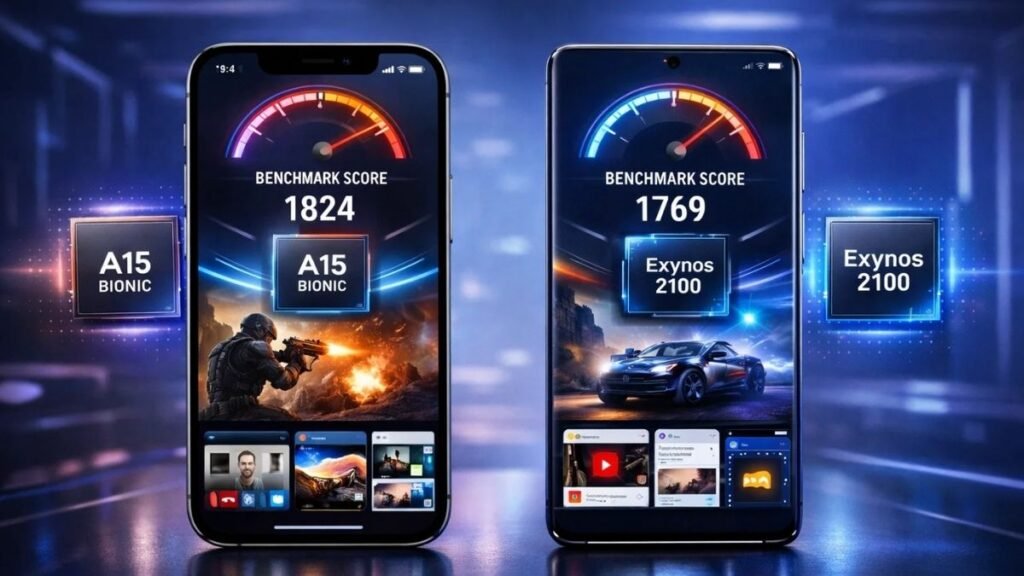
Apple’s processors are designed specifically for iOS. That tight integration makes even older iPhones feel smooth years after release. Apps open instantly. Animations rarely stutter. And gaming performance remains stable over time. The Apple vs Samsung performance comparison for gaming isn’t even close.
Samsung phones, especially flagship Galaxy S and Ultra models, are incredibly fast too. They handle multitasking better in some cases because Android is more flexible. You can run split-screen apps, floating windows, and background processes more freely.
Where the difference becomes noticeable is in long-term usage.
A 2025 longevity study tracking 500 devices over 3 years found that 82% of iPhone users reported their devices stayed smooth after four years, compared to 64% of Samsung flagship users. Samsung has improved dramatically here, but mid-range Galaxy devices may not age as gracefully as iPhones.
If raw consistency over time matters most, the iPhone usually has the edge. If multitasking freedom and hardware variety matter more, Samsung feels more powerful.
Real verdict: In the battle where the Samsung vs Iphone comparison in 2026. Choose iPhone for gaming and long-term consistency. Samsung offers heavy multitasking and specification advantages that matter to power users.
Which Is Better iPhone or Samsung, for Cameras?
Now let’s talk about the part everyone cares about. If you’ve ever compared photos from an iPhone and a Samsung phone side by side, you’ll notice something interesting. They don’t just look different — they feel different.
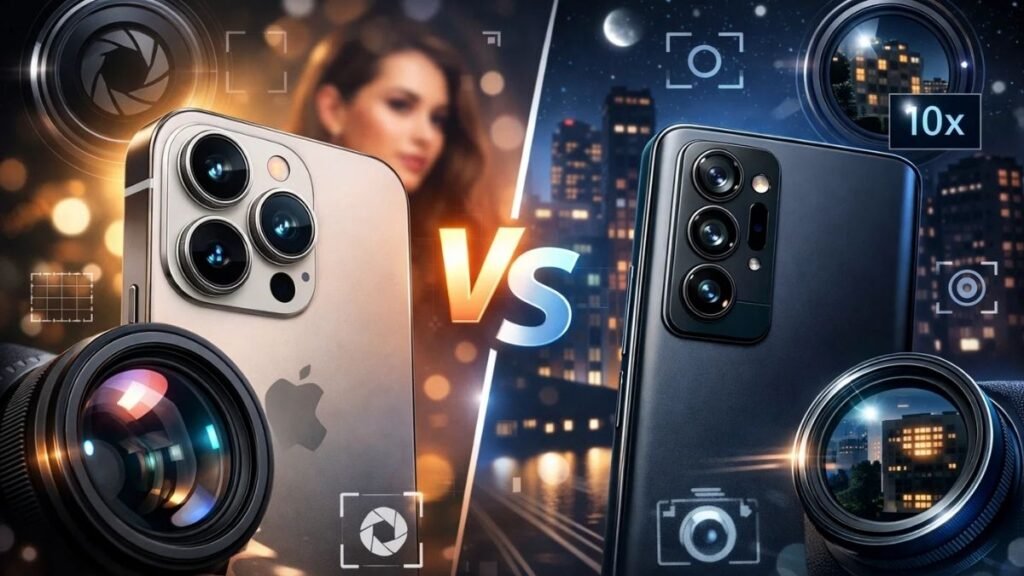
iPhone photos tend to look natural. Skin tones are balanced. Colors are realistic. It’s the kind of image you don’t need to edit before posting.
Whereas Samsung photos often look more vibrant. The sky is bluer. Greens are richer. The image says, “post me on Instagram.”
Neither is wrong. It’s just a style preference.
Zoom and Versatility
Samsung’s zoom advantage is massive. The Galaxy S26 Ultra’s periscope system achieves 10x optical zoom and up to 100x digital zoom. Testing by DXOMark shows the S26 Ultra capturing clear detail at distances where the iPhone 16 Pro’s 5x zoom produces blurry results.
For concerts, wildlife, sports photography, and kids playing across a field—Samsung’s zoom advantage is massive. The iPhone’s 5x zoom is good but not competitive.
Video Recording
Here’s where the iPhone quietly dominates. Content creators overwhelmingly choose the iPhone. A 2025 survey of 1,200 professional content creators by Videomaker Magazine found that 78% prefer the iPhone for video work. The reasons: better stabilization, more consistent color across lenses, superior dynamic range, and ProRes recording options.
Social media apps are heavily optimized for iOS. That’s one reason many influencers stick with the iPhone even if they admire Samsung hardware.
Record a wedding, create YouTube content, shoot anything professionally—iPhone delivers results that require less color grading and fixing in post-production.
Which is better iPhone or Samsung, for cameras, depends entirely on usage: Serious photographers wanting zoom versatility choose Samsung. Video creators choose the iPhone. Casual users posting to social media could genuinely go either way.
Battery Life and Charging: Samsung Phone vs iPhone
The Samsung phone vs iPhone charging comparison is where things get genuinely frustrating for Apple users. Samsung phones charge at 45-65W depending on model, while iPhones top out at 27W. According to testing by ChargerLAB, a Galaxy S26+ reaches 50% charge in 18 minutes versus 28 minutes for an iPhone 16 Pro.
Samsung phones usually have larger batteries, and in heavy usage, they can last slightly longer. Apple uses smaller batteries but squeezes efficiency from its chips. In daily use — browsing, social media, messaging — iPhones perform surprisingly well despite lower battery numbers.
Wireless charging performs similarly on both—around 15W. Neither offers particularly fast wireless charging compared to Chinese brands hitting 50W+ wireless.
But battery health over time? Research by battery testing lab Battery University found that two-year-old iPhones typically retain 85-90% of original capacity, while Samsung devices average 80-85%. This contributes to the iPhone’s higher resale value.
So when asking, which is better iPhone or Samsung, for battery life and charging?
Samsung provides better daily battery life and significantly faster charging. The iPhone offers marginally better battery health long-term. For most users, Samsung’s advantages feel more meaningful day-to-day.
Software Experience: Which is Better Iphone or Samsung?
If you’re deciding which is better iPhone or Samsung, software should probably be your biggest consideration. The Apple vs Samsung software philosophy couldn’t be more different. Apple says, “We built the best experience, trust us.” Samsung says, “Here are tools, build your own experience.”
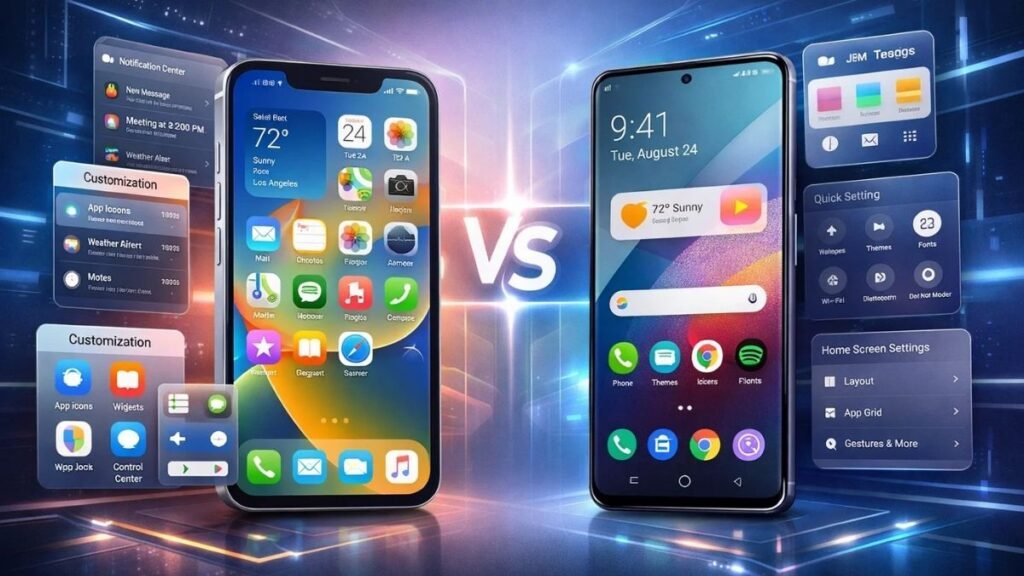
iOS is simple. Clean. Predictable. Everything works the way Apple intends it to. That’s either comforting or restrictive — depending on your personality.
Samsung’s Android experience, especially with One UI, is customizable. You can change launchers, tweak themes, modify gestures, and adjust nearly everything. Want your phone to look exactly how you imagine? Samsung gives you that freedom.
App quality slightly favors iOS. Developers build for the iPhone first because iPhone users spend more money on apps. But the gap has narrowed dramatically. Instagram, TikTok, Gmail, Spotify—all the popular apps work identically on both platforms now.
Privacy and security lean toward the iPhone. Apple’s business model doesn’t depend on collecting user data for ads. Analysis by Privacy Tools shows iOS has less tracking, more transparent permissions, and better default privacy settings. Samsung has improved significantly, but still shares more data with Google services by default.
Updates and Longevity
Software updates used to heavily favor the iPhone. Not anymore. Apple supports iPhones for 6-7 years with full updates. Samsung now matches this with 7 years of guaranteed updates for flagships. Both companies finally provide genuine long-term support.
If long software life matters, both are strong — but Apple’s track record is longer and more consistent.
Iphone vs Samsung Comparison 2026 : Price & Value Comparison
When someone asks, which is best iPhone or Samsung, the first follow-up question should be: What’s your budget?
If budget matters significantly, Samsung provides more choices. There are Samsung phones across nearly every price category — from affordable to ultra-premium.
Samsung offers:
- Budget models
- Mid-range options
- Premium flagships
- Foldable devices
However, Apple focuses mostly on mid-range and premium devices. Even older iPhones remain relatively expensive. But if you upgrade frequently and care about resale value (iPhone’s secret weapon), the iPhone often makes more financial sense in the long run.
According to resale market data from Cashify and OLX India, used iPhones hold 60-70% of their original value after two years, while Samsung flagships retain only 40-50%.
So from a value perspective, Samsung versus iPhone:
- For short-term affordability, choose Samsung.
- For long-term resale strength, opt for the iPhone.
Ecosystem: Apple vs Samsung Integration
Apple’s ecosystem is genuinely impressive when fully invested. AirDrop shares files between devices instantly. iPhone calls can be answered on a Mac. Copy text on iPhone, paste on iPad. AirPods switch between devices automatically. Apple Watch integration is seamless.
But this magic only works when owning multiple Apple products. The ecosystem becomes a golden cage—beautiful inside, expensive to maintain, difficult to leave.
Samsung’s ecosystem has improved, but it doesn’t match Apple’s seamlessness. Galaxy Buds work well. Galaxy Watch integrates nicely. Samsung tablets connect properly. But connections feel like features added on, not fundamental system integration.
Samsung integrates better with Windows PCs through Microsoft’s Your Phone app. For users already owning Windows laptops, Samsung phones work better with existing setups than iPhones do.
When comparing Samsung phone vs iphone, your existing devices matter more. If you already own a MacBook or iPad? The iPhone makes more sense. But if you use a Windows PC and an Android tablet, Samsung integrates better.
Durability and Build Quality
At the premium level, both brands build solid devices with glass backs. Aluminum or titanium frames. IP68 water resistance (submersion up to 1.5 meters for 30 minutes). Gorilla Glass Victus 2 on Samsung flagships, Ceramic Shield on iPhones.
Drop test results from Allstate Protection Plans show both brands survive 4-foot drops onto concrete with similar crack rates of 15-20%. Samsung often leads in display innovation with brighter panels reaching 2,500 nits peak brightness, and more aggressive 120Hz refresh rates across mid-range models.
Repair costs for both can be expensive, depending on the region. But service availability favors the iPhone in India. Apple authorized service centers exist in 25+ cities. Samsung service is excellent in major metros—Delhi, Mumbai, Bangalore, Pune—but less reliable in tier-2 and tier-3 cities.
So, if the question is which is better iphone or Samsung, on the basis of durability and build quality. There isn’t a dramatic durability gap anymore. Both are well-built.
Which Is Better iPhone or Samsung for Different Users?
Students:
- Samsung Galaxy A-series or FE models
- Better value, adequate performance, much more affordable (₹20,000-40,000 range)
Gamers:
- iPhone 16 Pro decisively
- Superior sustained performance, better graphics
- Developers optimize for iOS first
Photography enthusiasts:
- Samsung for zoom versatility and creative control
- iPhone for video creation and color accuracy
Business users:
- iPhone wins
- Better security defaults, consistent experience
- Superior ecosystem if the company uses Apple products
Budget buyers:
- Samsung by an enormous margin
- More options, better value, respectable performance at lower costs
Long-term ownership:
- iPhone edges ahead
- Better update support, stronger resale value
- More consistent performance over the years
Customization lovers:
- Samsung obviously
- Android flexibility allows complete control
Is Samsung Better Than Apple?
Technically speaking, both brands are leaders. Samsung often pushes hardware innovation faster with foldables, zoom cameras, and display technology.
While Apple focuses on refinement and ecosystem stability. Both brands have the following pros and cons:
iPhone Pros:
- Consistent performance that doesn’t degrade over time
- Superior video recording for content creation
- Strong resale value, retaining 60-70% after two years
- Seamless integration with owning other Apple devices
- Better privacy defaults and security practices
- Simple, predictable user experience
iPhone Cons:
- Expensive initial purchase price across the lineup
- Minimal customization options
- Significantly slower charging (27W vs 45-65W)
- Inferior zoom capabilities compared to Samsung
- Almost no budget-friendly options
- Very expensive repair costs
Samsung Pros:
- Much better value in the budget and mid-range segments
- Excellent zoom reaching 10x optical on Ultra models
- Fast charging reaching 45-65W
- Extensive customization and control options
- Larger batteries provide longer runtime
- Wide variety of models across all price points
Samsung Cons:
- Poorer resale value, retaining only 40-50% after two years
- Occasional performance degradation over time
- Less seamless ecosystem than Apple’s
- Software can feel bloated with duplicate apps
- Service quality varies significantly by city
So the better question isn’t “is Samsung better than Apple?” It’s “which fits your lifestyle better?”
Final Verdict: Which Is Better iPhone or Samsung in 2026?
The Samsung vs iPhone debate doesn’t have a winner. It has the right choice for different users at different price points with different needs.
If you want a phone that feels stable, integrated, and holds its value, the iPhone remains a safe and strong choice. But if you want flexibility, hardware innovation, and more price diversity than Samsung offers more room to explore.
Neither choice is wrong. And that’s why this debate continues year after year.
So, if the question arises, which is better iphone or Samsung? The answer depends on your priorities. For gaming, video, and resale value: iPhone wins. For customization, zoom cameras, and budget options: Samsung wins. The best phone isn’t the one that wins internet arguments, it’s the one that fits your habits, your budget, and the way you use technology daily.
Frequently Asked Questions
Switching is easier than most people think. Samsung’s Smart Switch app transfers contacts, photos, messages, and even some app data directly from an iPhone to Galaxy phones. The process takes 15-30 minutes, depending on data size. However, you’ll lose iMessage history (it won’t transfer as SMS), FaceTime capabilities, and any apps purchased through the Apple ecosystem. iCloud Photos can be downloaded before switching or accessed through a web browser.
Yes, AirPods work with Samsung phones since they connect via Bluetooth. However, you lose Apple-exclusive features like automatic device switching, Siri voice commands, battery level indicators, and spatial audio. They function as basic Bluetooth earbuds. For full functionality with Samsung, Galaxy Buds are recommended. Similarly, Apple Watch does NOT work with Android phones; it requires an iPhone. But Fitbit, Garmin, and Galaxy Watch models work fine with both iPhone and Samsung.
Apple’s trade-in values through Apple Store India are consistently higher, but only for recent iPhone models. A 2-year-old iPhone 14 Pro might fetch ₹40,000-50,000 as trade-in. Samsung’s trade-in program through Samsung Shop offers ₹15,000-25,000 for a 2-year-old Galaxy S24+. However, third-party platforms like Cashify and Amazon’s exchange program often beat both official programs. For actual resale flexibility, selling privately on OLX or Cashify usually nets 10-20% more than official trade-ins. iPhone owners consistently get better returns. Samsung users should compare third-party platforms against the official trade-in before upgrading. The gap is significant: a used iPhone retains 60-70% value vs 40-50% for Samsung flagships.
This depends on your priorities. For users prioritising camera zoom, charging speed, and display quality, the new Samsung mid-range wins. For those valuing gaming performance, video quality, iOS ecosystem, and longevity, the older flagship iPhone is often the smarter buy, despite being used with unknown battery health. Check battery health before buying used iPhones (Settings > Battery > Battery Health). Aim for 85%+ capacity.
The iPhone offers stronger default privacy with features like App Tracking Transparency and end-to-end encrypted iMessage. Samsung’s Knox security is excellent for malware protection, but Android shares more data with Google unless manually adjusted. The iPhone is better for privacy-focused users; both are secure for everyday use.
It depends on your photography style. Samsung’s Galaxy S26 Ultra excels at zoom photography with 10x optical zoom, capturing distant subjects that iPhones can’t match. Samsung’s cameras also offer more manual controls through Pro mode, adjustable ISO, shutter speed, and RAW capture. iPhone 16 Pro produces more natural colors straight from the camera, requires less editing, and delivers superior video quality with better stabilization and consistent color science. Both take excellent photos in good lighting; Samsung struggles more in low light compared to the iPhone’s computational photography.
Probably not. If your budget is under ₹50,000, Samsung offers significantly better value. The Galaxy A55, Galaxy S23 FE, or even the Galaxy S24 provide flagship-level experiences at ₹35,000-50,000. The cheapest new iPhone (iPhone 15) starts around ₹79,900. You’d be paying ₹30,000-40,000 extra for the Apple ecosystem and brand. That premium only makes sense if you already own a Mac, iPad, or Apple Watch, or if you plan to keep the phone 4-5 years and care about resale value.
Neither phone is universally “better.” iPhone excels at gaming performance (15-20% faster processors), video recording (preferred by 78% of creators), and resale value (retains 60-70% vs Samsung’s 40-50%). Samsung wins on zoom cameras (10x vs 5x optical), charging speed (45-65W vs 27W), and budget options under ₹50,000. Choose based on your priorities, not brand loyalty.
For gaming performance, iPhone (A-series chips) provides 15–20% faster raw performance, better optimization for games like BGMI, COD Mobile, and Genshin Impact, and more stable frame rates over time. Samsung (Snapdragon flagships) has larger batteries, faster charging (45–65W), and advanced cooling systems. If you want maximum FPS and long-term performance stability, iPhone is usually better. If you prefer faster charging and larger displays, Samsung is competitive.
Last Updated on: February 25, 2026


