Espresso Beans vs Coffee Beans — What’s Actually Different?
- Food & Drink
Simran
- 0
- 26 minutes read
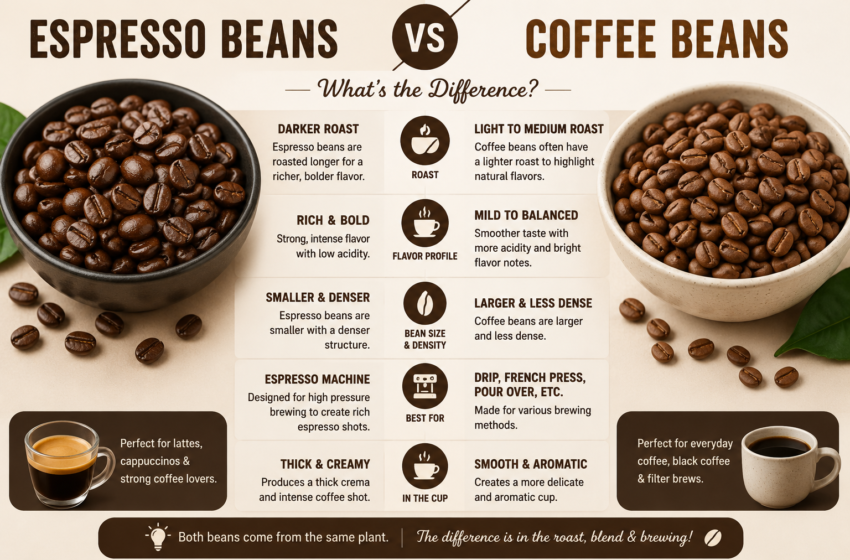
If you’ve ever thought about the actual difference between espresso beans and coffee beans, you aren’t alone. It’s one of those things that confuses almost everyone when they start buying whole-bean coffee.
They come from the same plant, the same farms, and often the same bag. What makes an espresso bean an espresso bean has nothing to do with the species of plant and everything to do with how the bean is roasted, ground, and brewed. Once you understand that distinction, a lot of the confusion around coffee labels, roast levels, and brewing methods starts to make more sense.
Let’s clear up the espresso beans vs coffee beans debate once and for all so you never waste money on the wrong bag again.
Are Espresso Beans and Coffee Beans the Same?
Technically, yes. Are coffee beans the same as espresso beans in terms of origin? Completely. Both come from the Coffea plant (primarily Arabica or Robusta varieties) grown in the same coffee-producing regions of Ethiopia, Colombia, Brazil, Vietnam, and elsewhere. There is no separate “espresso plant” and no coffee tree that produces beans exclusively for espresso machines.
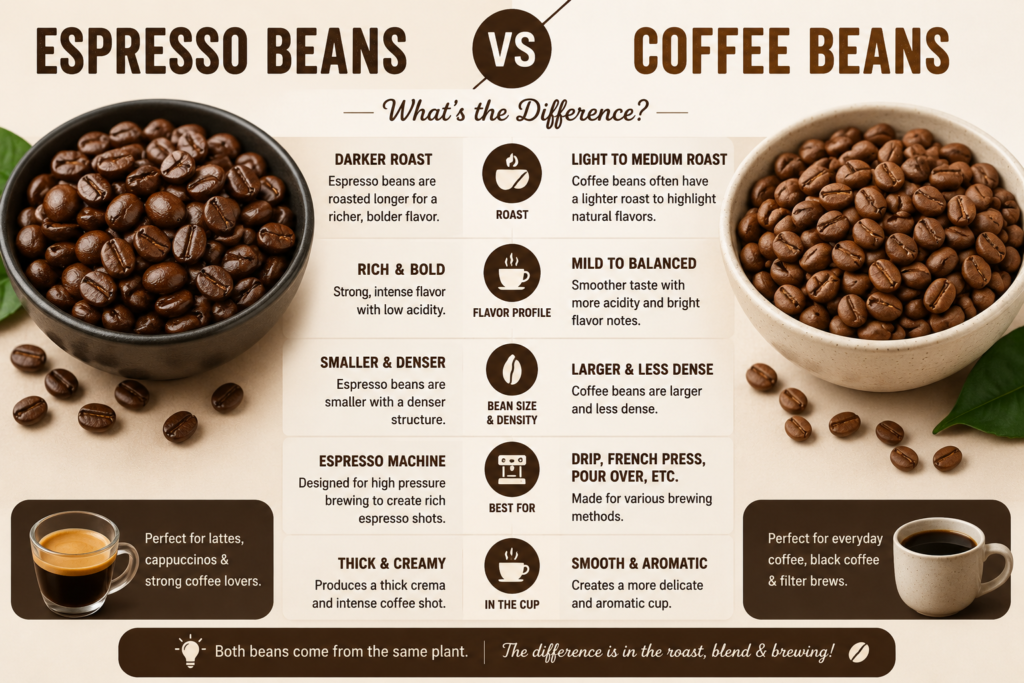
The label “espresso bean” is a roasting and marketing decision, not a botanical one. A roaster decides that a particular batch, roasted to a particular profile, with a particular blend composition, will work best under the high pressure and short extraction time of an espresso machine — and labels it accordingly.
So the difference between espresso beans and coffee beans lives entirely in the processing, not the plant.
What Is the Difference Between Espresso Beans and Coffee Beans?
When a roaster calls something an espresso bean, they’re signalling three things:
1. The Roast Style
Espresso blends are almost always roasted darker than filter coffee. Dark roasting reduces acidity and bitterness from the bean’s origin characteristics and produces a fuller, more caramelised flavour that holds up under espresso’s concentrated extraction. A very bright, acidic Ethiopian single-origin roasted light for filter coffee would taste sharp and unbalanced as espresso.
2. The Grind Size
If you’re buying pre-ground bags instead of whole beans, the texture difference is huge:
- Regular Coffee Grind: Looks and feels like coarse sand or sea salt. It’s designed for gravity brewing (like drip coffee) or steeping (like a French press), where water sits with the grounds for several minutes.
- Espresso Grind: Espresso requires a very fine grind because water passes through the coffee under around 9 bars of pressure in 25–30 seconds. Regular coffee makers use coarser grinds since water stays in contact with the coffee for much longer.
3. Flavor Profiles and Crema
Darker espresso roasts make it much easier to extract that signature golden layer of foam sitting on top of your espresso shot, known as crema. Light-roast coffee beans brewed under high pressure often lack this thick crema and tend to yield a shot that tastes sour or overly sharp.
Espresso Beans vs Coffee Beans: Quick Comparison
| Feature | Regular Coffee Beans | Espresso Beans |
| Roast Level | Light to Medium | Dark or Medium-Dark |
| Look of the Bean | Matte, dry surface | Shiny, oily surface |
| Grind Size | Coarse to Medium | Very Fine |
| Best Brew Method | Drip, French Press, Pour-Over | High-Pressure Espresso Machine |
| Flavor Profile | Bright, fruity, noticeable acidity | Bold, smoky, dark chocolate, low acidity |
Roast Level: The Biggest Difference Between Espresso Beans and Coffee Beans
In the espresso beans vs coffee beans conversation, roast level is where the practical difference lives for most home brewers.
Espresso beans lean dark — think deep brown, oily surface, chocolate and caramel notes, low to medium acidity. Coffee beans sold for filter or pour-over brewing lean medium to light — brighter, fruitier, more acidic, preserving the bean’s origin characteristics more clearly.
Neither is superior. They’re calibrated for different extraction methods. A light roast filter bean pulled through an espresso machine at high pressure will over-extract the delicate floral notes into harsh bitterness. A dark espresso roast brewed through a pour-over will produce a flat, heavy cup lacking the clarity and brightness the method is designed to highlight.
Matching the roast to the method is the single most impactful thing a home coffee drinker can do to improve their cup.
Can You Use Espresso Beans for Regular Coffee?
Yes, and it works well, with adjustments. Espresso vs coffee beans in a filter brewer isn’t a problem as long as you account for the darker roast. Expect a fuller, heavier cup with lower acidity and more chocolate or caramel notes. If you usually enjoy medium-roast filter coffee and switch to an espresso bean, the cup will taste noticeably different — not wrong, just darker and less bright.
For French press, cold brew, and Moka pot specifically, espresso beans work exceptionally well. These methods suit the fuller body and lower acidity that dark roasting produces.
Can You Use Regular Coffee Beans for Espresso?
Also yes, but grind size and roast level both matter more here. A medium-roast single origin can produce beautiful espresso if you’re willing to adjust your grind finer and extend extraction time slightly. Many specialty coffee shops now pull light-roast single origins through espresso machines deliberately, producing espresso with fruit-forward, complex flavour profiles that taste nothing like traditional espresso — and are excellent for exactly that reason.
The practical challenge is dialling in the grind. Light and medium roasts are denser than dark roasts and require finer grinding to extract properly under pressure. If your espresso machine’s grinder doesn’t go fine enough, a lighter roast will consistently under-extract and taste sour regardless of technique.
How to Choose the Right Coffee Beans for Your Brewing Method
- For espresso machines
Start with a purpose-roasted espresso blend. Once you understand your machine’s output, experiment with single origins — but expect to spend time dialling in the grind before the results improve.
- For filter, pour-over, or AeroPress
A medium to light roast single origin will produce the most nuanced, origin-forward cup. Espresso beans work but will produce a heavier, less complex result.
- For French press or cold brew
Espresso beans are genuinely excellent here. The coarse grind required for French press suits the fuller body of a dark roast, and cold brew with espresso beans produces a naturally sweeter, less acidic concentrate.
- For Moka pot
Traditionally brewed with espresso beans and that pairing works well, the Moka pot’s pressure-based extraction is the closest home method to actual espresso and benefits from the same roast calibration.
The bottom line on espresso beans vs coffee beans: the difference is real, but it’s not a rule. Swap them freely and adjust your grind and brew time accordingly; the worst outcome is one imperfect cup while you dial in the variables.
Espresso vs Coffee Beans: Which Should You Buy?
Understanding the espresso beans vs coffee beans comparison comes down to the gear on your kitchen counter:
- Pick up espresso beans if you own a home espresso machine, use a stove-top Moka pot, or love making milk-heavy drinks like lattes and flat whites where you need a bold flavor base.
- Stick to regular coffee beans if you rely on a classic drip coffee maker, French press, Aeropress, or pour-over setup where subtle, brighter flavors shine best.
Looking for more straightforward, practical guides on coffee, kitchen gear, and home brewing? Explore the latest articles right here on readnexpo.com!
Frequently Asked Questions
Yes, espresso beans and coffee beans come from the same plant and the same growing regions. The difference is in roasting and intended brewing method, not botanical origin. “Espresso bean” is a label applied by the roaster to indicate a darker roast calibrated for espresso machine extraction.
The main difference between espresso beans and coffee beans is roast level and blend composition. Espresso beans are typically roasted darker to reduce acidity and build body suitable for high-pressure extraction. Coffee beans for filter brewing are usually roasted lighter to preserve the bean’s origin characteristics and natural acidity.
Yes, espresso beans work in any brewing method. Expect a fuller, heavier cup with lower acidity and more chocolate or caramel notes than a medium-roast filter bean would produce. French press and cold brew particularly suit the darker roast profile of espresso beans.
Yes, any coffee bean can be used in an espresso machine. Medium and light roast beans produce espresso with brighter, fruit-forward flavour profiles. The key adjustment is grind size — lighter roasts need a finer grind to extract properly under pressure, which requires a grinder capable of very fine settings.
The oily surface on dark-roasted espresso beans is caused by extended roasting, which drives the bean’s natural oils to the surface. Lighter roasts don’t show visible surface oil. Oily beans can clog some grinders over time — if your machine recommends avoiding oily beans, choose a medium-dark roast espresso blend rather than a very dark one.
Espresso has a higher concentration of coffee per volume — about 60mg of caffeine in a 30ml shot versus 80–100mg in a 240ml filter coffee. Per cup, filter coffee actually delivers more total caffeine because of the larger volume. Espresso is more concentrated but not necessarily stronger in total caffeine per serving.
Medium-dark to dark roast is the traditional choice for espresso — lower acidity, fuller body, and caramel or chocolate notes that work well under high-pressure extraction. Specialty coffee shops increasingly use light and medium roasts for single-origin espresso, producing brighter, more complex shots for drinkers who enjoy fruit-forward flavour profiles.
Not inherently; caffeine content is determined by the bean variety (Robusta has roughly twice the caffeine of Arabica) more than by roast level. Dark roasting actually reduces caffeine slightly compared to light roasting of the same bean. Many espresso beans include Robusta in the blend specifically to boost crema and caffeine content, which is why some espresso blends deliver a stronger caffeine hit than single-origin Arabica filter coffee.