10 Simple Ways to Cut Your UK Train Travel Costs by 1/3 Today
- Travel
 Editorial Team
- 0
- 24 minutes read
Cutting your UK train travel costs is easier than most people think. A few smart habits – like booking Advance tickets early and using a Railcard – can shave up to a third off your fares. This guide breaks down ten simple, proven ways to save on every journey.
Most of what you pay for a ticket comes down to timing and how you book, not the distance you’re covering. Split ticketing takes advantage of that quirk in the fare system, while Advance tickets reward anyone willing to plan a week or two ahead instead of turning up at the platform on the day.
Then there’s the small print that catches most travellers out: off-peak windows, Railcard eligibility, and which ticket type actually applies to a route. Once you know where those rules sit, keeping your UK train travel costs low stops feeling like guesswork and starts feeling like second nature.
Why Ticket Prices Feel So Random in the First Place
Anyone who has ever paid £15 for a journey on a Tuesday and £48 for the exact same route on a Friday knows the feeling: UK train travel costs don’t seem to follow any obvious logic. That’s because they don’t, not really. Pricing is built around demand, ticket type, and how far ahead you book, rather than distance alone, which is exactly why two people sitting in the same carriage can pay wildly different fares.
Once that clicks, the rest of this list stops looking like a set of random hacks and starts looking like a system. Every tip below targets one of those three levers – demand, ticket type, or timing – because that’s really all UK train travel costs come down to underneath the confusion. Understand those three levers, and the whole business of keeping UK train travel costs down becomes far less mysterious.
1. Get a Railcard and Start Cutting UK Train Travel Costs Immediately
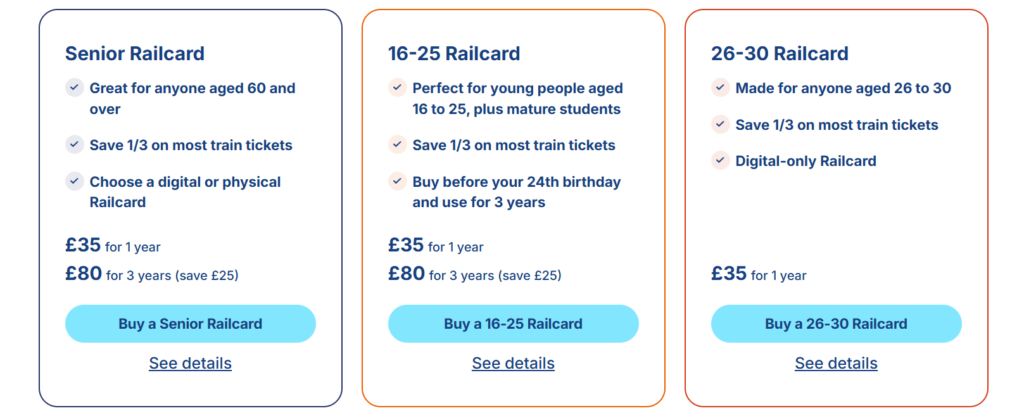
If there’s one single move that dents your UK train travel costs the fastest, it’s buying a Railcard. For roughly £35 a year, most Railcards get you 1/3 off Standard and First Class fares across England, Scotland and Wales, and that discount adds up fast if you travel even once a month.
There’s a Railcard for pretty much every situation. Under 30? The 16-25 Railcard or 26-30 Railcard covers you. Travelling with a partner or a mate? The Two Together Railcard splits the saving between two named people. Got kids in tow? The Family & Friends Railcard knocks a third off adult fares and 60% off for children aged 5 to 15. Over 60? The Senior Railcard usually pays for itself in two or three trips.
Think about it honestly: how many journeys have you made this year without checking whether a Railcard applied? That’s the fastest, most direct way to shrink your UK train travel costs before doing anything else.
2. Book Advance Tickets Early to Reduce UK Train Travel Costs
Advance tickets are where the biggest single savings usually hide. Train operators typically release these roughly 10 to 12 weeks before departure, and prices climb the closer you get to the travel date, sometimes doubling or tripling in the final week. If your journey has a fixed date, set a reminder and book the moment tickets go on sale.
The catch is flexibility. Advance tickets lock you to a specific train, so they suit planned trips far better than spontaneous ones. Picture a Friday trip booked six weeks out versus the same one booked the night before – the gap in price can be startling. For predictable routes, this is consistently the single best lever for reducing UK train travel costs.
Think about a trip to visit family for a birthday weekend, already marked on the calendar months in advance. Booking that Advance ticket the day it goes on sale, rather than the week before, is often the difference between a fare that feels reasonable and one that feels like a small emergency. The date doesn’t change. Only the price does, and only because of when you book – which is exactly why watching UK train travel costs closely around release dates pays off.
3. Try Split Ticketing on Longer Journeys
Split ticketing sounds like a loophole, but it’s completely legitimate under the National Rail Conditions of Travel. Instead of buying one ticket from A to D, you buy two or three tickets covering different legs of the same journey – say London to a midway stop, then that stop through to your final destination – and stay on the exact same train the whole way, as long as it calls at each split point.
Fares in Britain aren’t priced in a straight line with distance, so odd quirks in the system mean a broken-up journey can genuinely cost less than the through fare. Tools built for this kind of search do the comparing automatically, which saves the hassle of working it out by hand. On longer cross-country routes, this one trick alone can meaningfully cut your UK train travel costs without changing a single thing about how you actually travel. It takes a few extra minutes to search, but for a route travelled often, that time pays for itself many times over in lower UK train travel costs.
4. Avoid Peak Times to Lower Your UK Train Travel Costs
Peak fares exist because train operators know when everyone wants to travel, and pricing reflects that demand. Off-peak tickets, usually valid after the morning rush and sometimes after 9:30am, can cost noticeably less than an Anytime ticket for the exact same route.
If your schedule has any give in it at all, shifting a journey by even 30 or 45 minutes can move you from peak to off-peak pricing. It won’t work for every commute, but for leisure trips, visits to family, or days out, it’s often the easiest change to make. It’s also a completely free way to manage UK train travel costs – no card, no app, just a different departure time.
5. Weigh a Season Ticket Against Pay-As-You-Go
Commuting several days a week changes the maths completely. A weekly, monthly or annual Season ticket works out cheaper than buying individual Off-Peak or Anytime tickets once travel becomes routine, and if a working pattern is hybrid rather than five days a week, a Flexi Season ticket – covering a set number of days within a set period – often lands somewhere in the middle.
It’s worth actually running the numbers rather than assuming. Add up what a month of daily tickets costs, compare it against the Season ticket price for the same route, and factor in how many office days are realistic. For anyone commuting into a city regularly, this single comparison tends to be the biggest lever on their UK train travel costs of the whole year. Get it wrong, and UK train travel costs quietly creep up every single month without anyone noticing.
6. Use Fare Comparison Tools and Price Alerts
Booking directly through one operator’s website isn’t always the cheapest route. Fare comparison and split-ticketing platforms pull prices from across the network and show the lowest legitimate combination for a route, which is worth a quick check even for journeys that feel simple.
Some tools also let you set a price alert for a specific date and route, so instead of manually checking every few days, a notification lands when the fare drops or when Advance tickets are released. Over a year, tools like this quietly reduce UK train travel costs more than most people realise – ten minutes spent comparing before booking adds up.
7. Travel With Someone Else, on Purpose
Train fares have a strange habit of rewarding company. The Two Together Railcard is built exactly for this – two named people travelling together get 1/3 off, and because it’s a shared discount rather than two individual ones, it works out cheaper than each person buying their own Railcard separately for that route.
Groups of three or more can sometimes find better value through group-fare discounts on certain operators too. If a regular travel companion exists – a partner, a sibling, or a friend who makes the same trip – it’s worth checking together rather than booking alone. When it comes to UK train travel costs, a shared Railcard is often the simplest hack of all, and it costs nothing extra to ask.
8. Check Whether a Network Railcard Cuts Your UK Train Travel Costs
Anyone travelling regularly within London and the South East and not using a Network Railcard is quietly overpaying. It covers a wide area, applies to Anytime, Off-Peak and Travelcard fares, and at around £35 a year, it rarely takes more than two or three trips to pay for itself.
It’s easy to overlook simply because it’s regional rather than headline news the way the 16-25 Railcard is, but for the right commute or weekend pattern, it’s one of the more underused ways to bring UK train travel costs down. A two-minute eligibility check is a small price for a saving that repeats on every ticket booked within the zone.
9. Buy Tickets in the Right Shape: Return, Single, or Two Singles
There’s a common assumption that a return ticket always beats two singles, and it genuinely isn’t always true. Depending on the route and time of travel, two Advance singles can sometimes cost less than one Off-Peak return, particularly on longer intercity journeys where Advance pricing varies a lot by train rather than by ticket type.
There’s no universal rule here, which is exactly why it’s worth checking both options before paying. Get this right and UK train travel costs stop being left to chance – a minute of comparing singles against a return, especially for a journey booked well ahead, keeps them from creeping up out of habit.
10. Keep an Eye on Offers, Apps, and Loyalty Perks
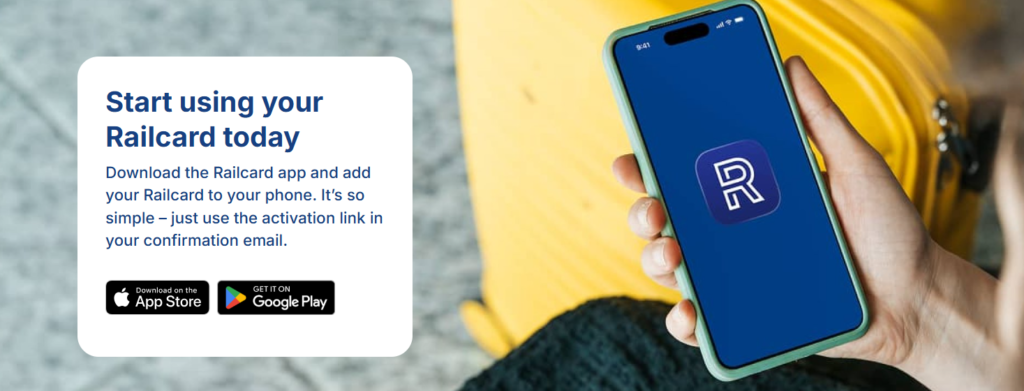
Railcard providers and train operators regularly run partner offers, from discounted theatre tickets to takeaway deals, and while these won’t shrink a fare directly, they add ongoing value to a Railcard that’s often forgotten once the card itself is bought. Downloading the relevant app and glancing at it before a trip takes a minute and occasionally turns up a genuinely useful discount. It’s a minor habit, but minor habits are exactly what keep UK train travel costs manageable over time.
Small as they are, these touches add another layer of savings onto UK train travel costs. None of these ten habits need to be used all at once. Picking two or three that actually fit a travel pattern – a regular commute, an occasional weekend trip, a long cross-country journey – is enough to start seeing a real difference without changing how or where anyone travels.
A Quick Recap Before You Book
Here’s the shortlist worth remembering next time a journey needs booking: get the right Railcard, book Advance tickets early, try split ticketing on longer routes, shift out of peak hours where possible, and check whether a Season ticket beats pay-as-you-go. Layer in a price-alert tool, travel with someone else when it works, look up the Network Railcard for South East trips, compare singles against a return, and keep an eye on loyalty offers.
None of these are complicated on their own. Stacked together, they’re the difference between paying whatever the first fare says and actually staying on top of your UK train travel costs journey after journey.
Bringing It All Together
None of this requires becoming a rail-fare obsessive. Small, repeatable habits – checking Railcard eligibility, booking Advance tickets early, and comparing split-ticket options before paying – are what actually move the needle on UK train travel costs over a year of travel. Start with whichever tip matches how you already travel, whether that’s a Tuesday commute or a once-a-year trip to see family, and let the savings build from there. A lower fare on a single journey is nice; a genuinely reduced set of UK train travel costs across every trip is what actually changes a travel budget.
Frequently Asked Questions
A few quick answers to the questions that come up most when people start looking at their UK train travel costs.
Combining a Railcard with an Advance ticket booked early is usually the cheapest approach, since the two discounts often stack. Comparing split-ticket options before paying is one of the simplest remaining ways to reduce UK train travel costs further.
Yes. Split ticketing is fully permitted under the National Rail Conditions of Travel, provided the train calls at each station where one ticket ends and the next begins. You usually stay on the same train throughout.
Most Railcards give 1/3 off Standard and First Class fares and cost around £35 a year. For anyone travelling monthly or more, the saving typically covers the card’s cost within two or three journeys.
Advance tickets are usually released around 10 to 12 weeks before travel, though this varies by operator and route. Booking as soon as they appear generally secures the lowest available price for that journey.
It depends on the route and time of travel. Two Advance singles sometimes beat one Off-Peak return, especially on longer journeys, so it’s worth comparing both before booking rather than assuming either is automatically cheaper.
Last Updated on: September 24, 2026