Whey Protein and Whey Isolate: What’s Actually Different (And Which One You Need)
- Food & Drink
Simran
- 0
- 16 minutes read
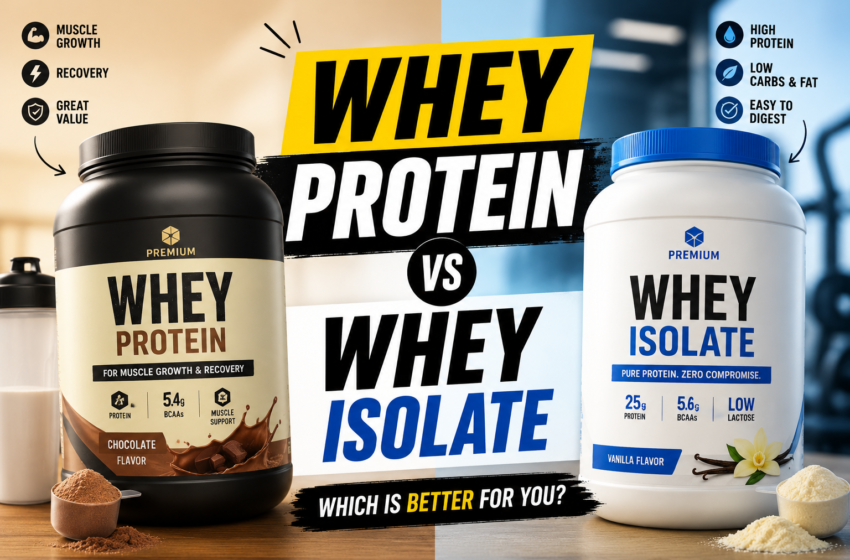
Stand in front of a supplement shelf, and you’ll see two tubs that look nearly identical, priced ₹500-800 apart, both claiming to be the protein you need after a workout. The whey protein and whey isolate confusion isn’t your fault — brands rarely explain the difference on the label; they just expect you to know which one justifies the higher price. Here’s what actually separates them, in plain terms.
What’s the Difference Between Whey Isolate and Whey Protein? (Quick Answer)
Whey protein (usually labeled “whey concentrate”) goes through one round of filtration and typically contains 70-80% protein by weight, with the rest made up of carbs, fat, and lactose. Whey isolate goes through additional filtration that strips out most of that fat and lactose, pushing protein content up to 90% or higher.
That additional processing step is essentially what separates whey isolate from whey protein. Isolate is concentrated (refined further). It’s not a different source or a different animal-derived ingredient; it’s the same starting material taken one or two steps further.
Whey Protein and Whey Isolate: How They’re Made
Both start the same way — whey is the liquid byproduct left over from cheese production, separated from milk solids and dried into powder. Whey concentrate stops after basic filtration, which is why it retains more of the natural fat, carbs, and lactose found in milk, along with a slightly fuller flavor that a lot of people actually prefer.
Whey isolate goes through one of two additional processes: microfiltration or ion-exchange. Both strip out nearly all the fat and most of the lactose, leaving a purer, faster-digesting protein powder behind. That extra processing step is also exactly why isolate costs more per tub — it’s not a marketing markup, it’s a genuinely more expensive manufacturing process.
While managing your protein intake is a key foundation for physical goals, optimizing your broader beverage choices can also support hydration and daily recovery. If you’re looking to refine your overall drink choices alongside your fitness routine, take a look at our detailed breakdown on Black Tea vs Green Tea: Differences, Benefits & Which Is Better for You?.
Isolate Protein vs Whey Protein: The Nutrition Breakdown
Run the numbers side by side, and the isolate protein vs whey protein gap becomes concrete rather than abstract. A typical 30g scoop of whey concentrate delivers around 24g of protein, 2-3g of fat, and 3-4g of carbs, including a meaningful amount of lactose. The same size scoop of whey isolate delivers closer to 27g of protein, under 1g of fat, and often less than 1g of carbs.
For most people building muscle or hitting a daily protein target, that gap is small enough not to matter much. Where it matters a lot more is for anyone lactose intolerant — concentrate’s residual lactose is enough to cause real discomfort for a lactose-sensitive gut, while isolate’s near-zero lactose content usually sits fine even for people who can’t tolerate a glass of milk.
Whey Protein or Whey Isolate — Which Absorbs Faster?
This is where a lot of marketing overstates the real difference. Both whey concentrate and whey isolate are fast-digesting proteins compared to casein — the practical absorption gap between whey protein or whey isolate specifically is smaller than most product pages suggest. Isolate does absorb marginally faster due to lower fat and carb content slowing digestion less, but for someone drinking a shake within an hour of a workout, that difference is close to irrelevant to actual muscle protein synthesis.
For most people, the small difference in digestion speed is unlikely to make a meaningful difference to muscle gain. Your total daily protein intake matters much more than whether you choose to concentrate or isolate.
Whey Protein or Whey Isolate: Which One Should You Choose?
The decision usually comes down to three things: budget, lactose tolerance, and how strict your macro tracking is.
- On a tighter budget, with no lactose issues → whey concentrate is the smarter buy; the extra protein purity in isolate isn’t worth the price premium for most casual gym-goers
- Lactose intolerant or sensitive stomach → whey isolate almost always sits better, since the lactose that causes bloating and discomfort is mostly filtered out
- Cutting weight or tracking macros closely → isolate’s lower carb and fat content makes it easier to fit into a calorie deficit without eating into other macro targets
- Prioritizing taste and mixability over marginal purity → concentrate tends to taste creamier and mixes just as well, without the slightly “thinner” texture some people notice with isolate
Neither one is objectively better; they’re built for slightly different priorities, and most people would do fine on either.
Whey Protein vs Whey Isolate: Key Differences at a Glance
| Factor | Whey Protein Concentrate | Whey Isolate |
| Protein content | Typically 70% to 80% | Typically 90% or more |
| Lactose | Higher | Much lower |
| Fat and carbs | Higher | Lower |
| Price | Usually cheaper | Usually more expensive |
| Best for | Budget-conscious users | Macro tracking or lactose sensitivity |
| Taste | Often creamier | Often lighter |
| Overall value | Best for most general users | Best when purity matters |
The bottom line is simple: choose whey concentrate if you want solid protein at a lower price, and choose whey isolate if lower lactose, higher protein purity, or tighter macros matter more to you.
Whey Protein vs Whey Isolate: Which One Is Right for You?
The whey protein and whey isolate debate isn’t really about which one is superior; it’s about which one matches your body and your budget. Isolate wins on purity, lower lactose, and marginally faster absorption. Concentrate wins on price and, for a lot of people, on taste. Unless you’re lactose intolerant or cutting hard, the difference between them will matter far less to your results than actually hitting your daily protein target consistently, whichever tub gets you there.
FAQs About Whey Protein and Whey Isolate
The difference between whey isolate and whey protein mainly comes down to processing. Whey protein concentrate undergoes basic filtration and typically contains 70% to 80% protein, while whey isolate goes through additional filtration to reach 90% or more protein with much less fat and lactose.
The difference between isolate protein and whey protein for cutting specifically is the carb and fat content — isolate’s lower numbers make it easier to fit into a calorie deficit without sacrificing other macros.
Not significantly. Both isolate protein vs whey protein options deliver similar muscle-building results for most people — isolate’s slightly higher protein purity and faster absorption offer a marginal edge, not a dramatic one.
Whey isolate is almost always the better choice between whey protein or whey isolate for lactose intolerance, since the extra filtration removes most of the lactose that causes digestive discomfort.
It depends on your priorities. For instance, whey isolate is worth it if you’re lactose sensitive or tracking macros tightly, but for most casual gym-goers, whey protein concentrate delivers nearly the same results at a lower price.
Last Updated on: August 13, 2026