Unlock Secret Travel Perks: How to Save on Dining, Shows, and Train Fares with Railcard
- Travel
 Editorial Team
- 0
- 19 minutes read
A Railcard cuts your train fares by up to a third, and that’s really just the opening act. Beyond cheaper tickets, Railcard discounts stretch into 2-for-1 meals, cut-price theatre seats, and days-out deals across the UK, turning one small card into hundreds of pounds saved a year.
Most people buy one purely for the train fare savings, and fair enough – watching a ticket price drop by a third feels like a win every time you book. But the card quietly does more than shrink your fare. Tucked alongside it sit genuine dining discounts at thousands of restaurants nationwide.
Whether travelling solo or splitting costs with someone, a digital Railcard lives right on your phone, ready the moment a conductor asks. Add in theatre discounts, cinema deals, and food-box offers, and regular travellers start treating it less like a travel add-on and more like a lifestyle subscription.
What a Railcard Actually Gets You
You’ve probably seen a Railcard mentioned on a train company’s website and skimmed past it, thinking it’s just for students or pensioners. It isn’t. A Railcard is a discount card, sold by National Rail, that knocks up to a third off most train fares across England, Scotland, and Wales. Buy one, register it, and it pays for itself within a handful of journeys if you travel even semi-regularly.
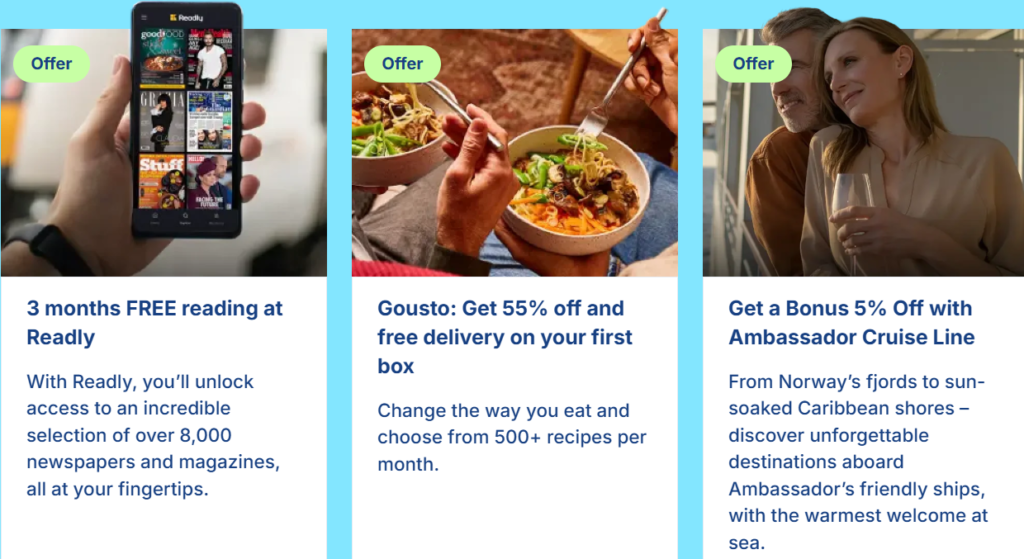
Here’s the bit that catches people off guard, though. It isn’t just a ticket-price trick. Once you’re holding one, whether physical or digital, you’re automatically eligible for a whole side-menu of partner offers that have nothing to do with trains at all. Restaurants, theatres, magazine subscriptions, recipe boxes, even cruise holidays all hand out discounts to cardholders, and most people never bother to check the offers page to see what’s sitting there unclaimed.
Think about it like this: you paid £35 expecting to save on a few train tickets to visit family. Six months later, you’ve also had 2-for-1 dinners, a discounted matinee, and free months of a magazine app you didn’t even know came bundled in. That’s the real value of a Railcard – the fare discount gets you through the door, but the extras are where the number really starts to add up.
Real Savings on Train Fares
Let’s start with what most people already know, because it’s still worth spelling out properly. With most Railcard types, you get roughly a third off standard fares, and the saving applies whether you’re grabbing an Off-Peak return to see a friend or booking a longer Advance ticket weeks ahead.
Booking further ahead tends to stack the savings even higher. Advance tickets are already cheaper than Anytime fares, so layering the discount on top of an early booking can genuinely halve what you’d have paid walking up to the counter on the day. If you commute occasionally or take the same route often, that difference adds up fast across a year.
There are a few things worth knowing before you rely on it, though. Most types come with time restrictions, so peak-hour weekday travel before half nine in the morning sometimes doesn’t qualify. Always carry your card with you too, digital or physical, because if a conductor asks and you can’t show it, you’ll be charged the full fare on the spot. It’s a small hassle for a saving that, on average, works out to well over a hundred pounds a year for regular travellers.
The Dining Discounts Nobody Talks About
This is the part that genuinely surprises new Railcard holders. Alongside your travel savings, most Railcards come bundled with access to a restaurant discount scheme that gets you 2-for-1 meals or a straight 25% off your bill at thousands of restaurants nationwide. It usually runs through a linked membership, often free for a set number of months when you activate your card, and after that it’s a small yearly fee that pays for itself after one decent meal out.
Picture a fairly ordinary Friday. You’ve had a long week, you fancy going out for dinner instead of cooking, but the bill for two always stings a little more than you’d like. With the dining discounts attached to your card, that same dinner costs noticeably less, and it works across a genuinely wide spread of restaurant chains, not just one or two token partners. It’s the kind of saving you don’t think about until the first time you use it, and then you wonder why you didn’t sign up sooner.
The trick is remembering to actually register for it. A lot of cardholders never realise this benefit exists because it isn’t printed on the card itself, it’s tucked away on the offers page online. Once you’re signed up, though, you’ll get a separate membership you can show alongside your card whenever you’re eating out.
Cheaper Shows, Theatre Tickets, and Days Out
Train fares and dinner are one thing, but the entertainment side of a Railcard is where things get genuinely fun. Registered holders get access to discounted theatre tickets, sometimes up to half price, for West End shows and touring productions around the country. If you’ve ever put off booking seats because the prices crept past what felt reasonable, this is exactly the gap it fills.
It isn’t limited to the theatre, either. There are 2-for-1 deals on a rotating list of attractions and days out, so a weekend trip with the kids or a spontaneous city break can come with a built-in discount on the things you’d have paid for anyway. Combine that with your discounted train ticket getting you there, and a single card ends up shaping the whole day, not just the journey.

None of this requires a separate app or a complicated sign-up process most of the time. You browse the offers page, pick what you fancy, and follow the booking link. It essentially becomes a small passport to cheaper leisure, quietly working in the background every time you plan something outside the house.
The Extra Perks Most People Miss
Beyond food and shows, there’s a rotating list of lifestyle offers attached to a Railcard that shifts throughout the year, so it’s worth checking back every so often. Recipe box services have offered steep discounts on first orders for cardholders, letting you try a new way of cooking dinner without committing to the full price. Magazine and newspaper apps have handed out free trial months, useful if you’re the type who reads on the train anyway.
Even travel itself gets extra value stacked on top. Rail-based holiday packages sometimes offer a percentage off when booked through a partner, and cruise lines have run bonus discounts exclusively for cardholders. None of these are permanent, since partner offers rotate in and out, but the pattern holds: once you’ve got one, checking the offers page every couple of months tends to turn up something genuinely useful.
Picking the Right Railcard for You
Not every Railcard suits every traveller, and choosing the wrong one just means paying for benefits you won’t use. Here’s a quick rundown of who each type actually fits.
If you’re between 16 and 25, or you’re a mature student, the 16-25 Railcard is built for you and covers three years of travel if you buy it before your 24th birthday. Turning 26 doesn’t shut the door either, since the 26-30 Railcard picks up where that one leaves off, running for a single year at a time. Anyone 60 or older slots neatly into the Senior Railcard, which works the same way as the younger versions but with no upper age limit to worry about.
Travelling with someone else regularly changes the maths. The Two Together Railcard is built for two named people who often travel as a pair, while the Family & Friends Railcard covers up to four adults and four children, making it the obvious pick for family day trips. Veterans and people with a qualifying disability have their own dedicated cards too, each with slightly different rules around companion discounts.
If most of your travel happens within London and the South East, it’s worth checking the Network Railcard separately, since it’s built specifically for that region rather than nationwide journeys. Whichever one fits your situation, the underlying perks, from the fare discount to the dining and entertainment deals, stay largely the same across the board.
| Railcard Type | Best For | Price |
| 16-25 Railcard | Ages 16-25, or mature students | £35 / 1 yr, £80 / 3 yrs |
| 26-30 Railcard | Ages 26-30 | £35 / 1 yr |
| Senior Railcard | Ages 60 and over | £35 / 1 yr, £80 / 3 yrs |
| Two Together Railcard | Two named adults travelling together | £35 / 1 yr |
| Family & Friends Railcard | Up to 4 adults + 4 children | £35 / 1 yr, £80 / 3 yrs |
| Disabled Persons Railcard | Eligible disabled travellers + 1 companion | £20 / 1 yr, £54 / 3 yrs |
| Veterans Railcard | UK Armed Forces veterans | £35 / 1 yr, £80 / 3 yrs |
| Network Railcard | Travel within London & the South East | £35 / 1 yr |
| 16-17 Saver | Ages 16-17 | £35 / 1 yr |
Getting the Most Out of Your Railcard
Buying one is the easy part. Actually squeezing full value out of it takes a bit more intention. Set a reminder to browse the offers page every month or two, since new partner deals appear and old ones quietly disappear without much warning. Keep your card, physical or digital, somewhere you’ll actually have it on you, because forgetting it at home on travel day means paying full price regardless of what you’re entitled to.
It also helps to book train tickets further in advance whenever your plans allow it. Advance fares combined with your discount tend to be the cheapest way to travel by a wide margin, far more than turning up and buying on the day. And don’t overlook the smaller offers, the magazine trials, the recipe box discounts, the cinema deals, because they add up quietly over a year even though none of them feels like a big win on its own.
Treat your Railcard less like a one-off purchase and more like a running discount system you’re allowed to keep checking in on. The people who get the most value from theirs aren’t necessarily the ones who travel the most; they’re the ones who actually look at what’s on offer instead of letting it sit forgotten in a wallet.
Frequently Asked Questions About Railcard Discounts
How much does a Railcard cost?
Most Railcards cost £35 for one year or £80 for three years, letting you spread the cost while locking in savings. The Disabled Persons Railcard is cheaper, at £20 for one year and £54 for three.
Can I use my Railcard for dining and theatre discounts straight away?
Yes, most dining and entertainment offers activate as soon as your Railcard is confirmed. You’ll usually need to register separately on the offers page to claim the restaurant and theatre discounts.
Do I need to carry my Railcard when I travel?
Yes, always carry it, digital or physical, alongside your ticket. Without it, you’ll be asked to pay the full fare on the spot, even if you booked with the discount applied.
Which Railcard should I choose if I travel with my partner?
The Two Together Railcard suits two named adults who travel together regularly. It gives both of you a third off fares whenever you’re travelling as a pair, outside a few peak-time restrictions.
Are Railcard discounts only for train travel?
No. Beyond cheaper fares, Railcard holders get access to restaurant deals, theatre ticket discounts, recipe box offers, and seasonal travel perks that have nothing to do with train tickets directly.
Make Your Railcard Discounts Work Harder This Year
A Railcard was never just about knocking a third off a train ticket, even though that alone is reason enough to get one. Once you start actually using the dining discounts, the theatre discounts, and the smaller offers tucked away on the partner page, it starts paying for itself in ways that have nothing to do with travel at all. The savings are there whether you’re commuting weekly or taking the odd trip to see family, and none of it requires much effort beyond remembering to check what’s currently on offer.
If you haven’t picked one up yet, or you’ve had one sitting unused in a drawer, it might be worth a proper look now. Between the train fare savings, the meals out, and the shows you’d been putting off booking, a Railcard tends to earn back its cost quickly and then just keeps quietly saving you money in the background, one small perk at a time.
Last Updated on: September 15, 2026