B2B Search Optimization: Proven SEO Strategies to Improve B2B Website Rankings and Drive More Qualified Leads
- Technology
 Neelam Rawat
- 0
- 31 minutes read
B2B search optimization comprises increasing the likelihood that a B2B website will be ranked highly in search engines – like Google – so that it can attract key decision makers, procurement teams and buying groups. Utilizing this marketing channel allows them to combine keyword targeting with the content strategy, technical SEO, and link building that’s based on longer sales cycles in such a way that this can serve as a way for companies to improve their rankings and gain further effective types of leads.
For anyone hoping to make serious money online, achieving a high rate of B2B search optimization has become essential. You need to identify the SEO techniques (how-to-do optimization of content – technical fixes and more) you intend to use before getting the top ranks on page 1 of that site.

What Is B2B Search Optimization and Why Does It Matter?
Consider the last time your company finally made a change to a new vendor. You didn’t buy on impulse. You looked, you weighed the pros and cons, read reviews, and involved two or three colleagues before signing on any dotted lines. That is the way your own buyers think, which is also precisely why B2B search optimization does not work like a normal marketing push. You are briefing them as your prospects step through the different stages of a slow, thoughtful purchase and not just at the point they want to buy.

How B2B SEO Differs from B2C SEO
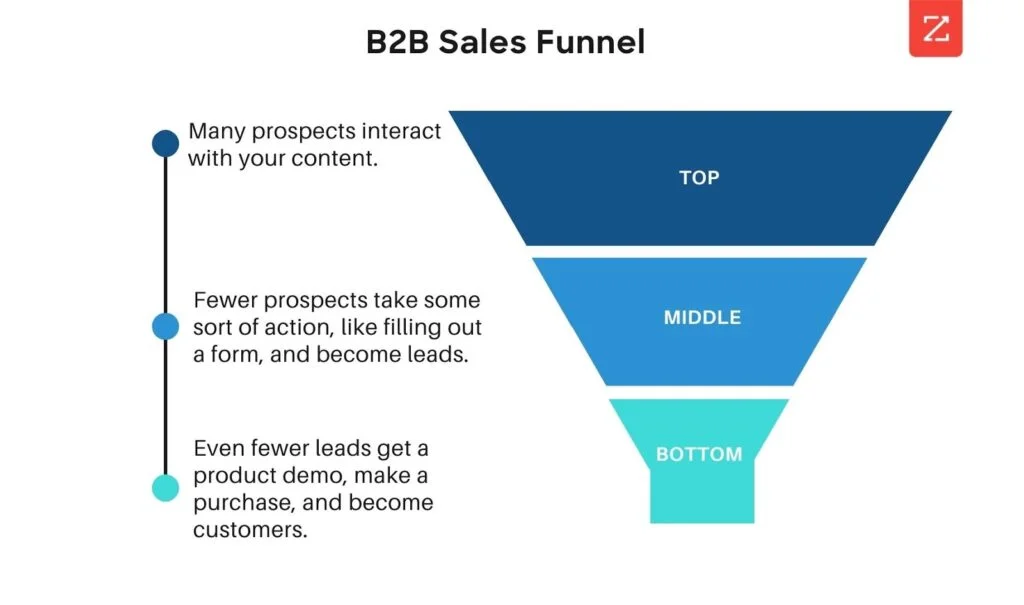
B2C SEO is typically aimed at volume, impulse purchases, and short buying cycles. B2B SEO is predicated on a smaller number of infinitely more valuable keywords and a buying committee that will consume multiple pieces of content before any tyke picks up the phone.
- This means your content has to nurture, not just convert, over the course of weeks or months due to longer sales cycles
- Finance, operations, and IT all search for the same solution differently.
- The intent embedded in those keywords is less about immediate purchase, more about research, comparison, and evaluation
- Signals such as case studies, certifications, and testimonials take precedence in ranking and conversion
Why Organic Search Generates High-Quality B2B Leads
When someone finds you through organic search, they searched for a problem you solve. They arrive with intent already built in, which is why organic leads tend to convert better than cold outbound. Improve B2B website rankings for the right terms, and you’re essentially getting introduced to buyers who are already halfway convinced.
How to Rank for B2B Searches in Competitive Industries?
If you are asking how to rank for B2B keywords in a crowded niche, acknowledge that you are not competing with everybody – you are competing with the few sites your actual buyers trust. And that re-contextualizes the entirety of the strategy – and it’s that change in mindset that makes B2B search optimization function.
Understanding Your Target Audience
You need to know exactly who is googling (what job title) & what their greatest fear of messing up is. On the same buying committee, a procurement manager does not search the same way as a CTO evaluating the same software.
Mapping Keywords to the Buyer’s Journey
Robust B2B keyword research aligns terms with a three-phase journey: awareness, consideration, and decision-making. At the beginning of their buyer journey they will look for more general, informative terms. Search terms of comparison and pricing for late-stage buyers You need to have something for every stage in your content library.
- Awareness stage: ‘what is [problem]’, ‘why does [challenge] happen’
- Consideration stage: ‘[solution] strategies’, ‘best practices for [category].’
- Decision stage: ‘[product] vs [competitor]’, ‘[category] pricing’, ‘[category] for [industry]’
What Makes Google Rank B2B Websites Higher?
Google doesn’t have a separate algorithm for B2B sites, but the signals that matter most for B2B search optimization line up neatly with how B2B buyers actually behave: relevance, depth, and demonstrated trust.
Search Intent and Content Relevance
Search intent optimization means that you match your content format and depth with what the actual person in search is looking for. ‘How to Optimize for B2B SEO Success’ is transactional; it doesn’t want a pyramid scheme. Mess up that mismatch, and rankings fall flat no matter how many keywords you sprinkle in.
Authority, Trust, and Experience (E-E-A-T)
The higher that work insight/experience appears in the paragraphs linked to it, the more likely Google will reward your content. If the page contains author bylines, case studies, original research, and honest coverage of trade-offs, all indicate it is a real practitioner writing, not a content mill.
Build a Strong B2B Keyword Research Strategy
Disciplined B2B keyword research is the first step of every solid B2B search optimization, and it is how most teams either sprint toward growth or waste months pursuing traffic that never converts.

Finding Commercial Intent Keywords
Forget about search volume and go with the more analytical study of intent instead. Many times, a keyword with 200 searches a month and obvious commercial intent will convert better than that 5,000-search term, which is just unfiltered informational traffic.
Choosing Keywords That Convert
Focus on role/industry-or problem-specific keywords. If you search, the double quotes will give you B2B SEO best practices for Lead generation; this tells you what a searcher wants ( and insists in ) and what content will fulfil them.
- Use Google’s autocomplete and ‘People Also Ask’ to surface real buyer phrasing
- Cluster keywords by topic rather than optimizing one page per keyword
- Check competitor ranking pages to spot content gaps you can fill better
How Can You Improve B2B Website Rankings with Better Content?
Content is still the lever that moves rankings the most, but it has to be structured with intent, not just published for volume’s sake. This is where B2B search optimization actually pays off – it’s how you improve B2B website rankings in a way that compounds over time.
Creating Topic Clusters
Group related content around a central pillar page, with supporting articles linking back to it. This structure signals topical depth to Google and keeps readers moving through your site instead of bouncing after one page.
Publishing Helpful, Expert Content
Every piece should answer a real question your buyers ask, backed by B2B content marketing that reflects genuine industry knowledge rather than recycled generalities. If a competitor’s article could have been written by anyone, yours should read as it could only have come from someone who’s actually solved the problem.
Optimize Every Important Page for Search Engines
Great content still needs solid on-page fundamentals to rank consistently, and this is often the fastest set of wins available to you.
On-Page SEO Essentials
B2B on-page SEO, strong title tags, descriptive headers and content based on the exact questions your buyers are asking.
- Unique title tags and meta descriptions for each page, not ones generated by templates
- Employ a single non-spammy H1 and have a clear, insane, logically flowing H2/H3 structure matching search intent
- Use alt text to describe the images and compress them
- Make your URLs short, easy to read, and containing keywords.
Internal Linking Best Practices
Link between related pages using natural, descriptive anchor text. This helps search engines understand relationships between pages and helps visitors find the next logical page in their research journey.
Why Technical SEO Is Critical for B2B Websites?
You can publish the best content in your industry and still lose rankings if the technical foundation underneath it is weak. Technical SEO for B2B websites deserves the same attention as content within any serious B2B search optimization plan, especially since many B2B sites run on complex CMS platforms with years of accumulated clutter.
Improve Site Speed and Core Web Vitals
Slow-loading pages frustrate visitors and hurt rankings. Compress images, minimize unnecessary scripts, and monitor Core Web Vitals regularly so small issues don’t compound into bigger ranking problems.
Mobile Optimization and Crawlability
Even in B2B, a growing share of research happens on mobile. Make sure your site renders cleanly on smaller screens, and audit your robots.txt and sitemap so search engines can actually crawl the pages you want indexed.
How to Increase B2B Website Rankings Through Link Building?
High-quality backlinks are among the most influential ways for a content page to climb the search results (or SERP), so you have to be very selective. One great link from a renowned publication is far more powerful in establishing your brand’s trustworthiness than having your site appear on fifty unrelated directory pages.
Earn High-Quality Backlinks
This strategy is simple: don’t chase the number, just get the quality you are aiming for. If you get a link only from one respected publication in the business world you are in, then that should be enough to give you quite some authority.
Digital PR and Industry Partnerships
Publish your findings or commentary from an expert or work on co-branded content with companies in your field who sell products or services that are complementary to yours. Not only do these partnerships create links through content naturally, but they also present your brand to an already interested audience.
Strengthen Your Local and Global B2B SEO Presence
Depending on your business model, your strategy is probably going to have to include geographical factors and, in some cases, multiple ones simultaneously.
Local SEO for Service-Based Businesses
If your operations are confined to a limited geographical area, you have to get the most from your Google Business Profile by claiming and optimizing it, ensuring that your geographical details are uniform in all listings, and creating location-focused content that addresses the demands of your local industry.
International SEO Considerations
To effectively market to consumers in other countries, a company must have hreflang tags, create market specific content and be sensitive to the fact that the way search behavior and the use of language can vary between marketplaces.
Which SEO Metrics Should Every B2B Business Track?
If you don’t measure your results, you can’t work on your SEO strategies. For example, with a well-rounded B2B SEO plan, apart from keyword rankings, you can monitor various other data points that are indicative of your performance.
Organic Traffic and Keyword Rankings
The primary source to see your rankings and how you are performing in search engines is the Google Search Console. Here, we will know exactly the keywords that are leading people to your site and how your position has changed in different queries.
That’s why this is the first source most marketers would refer to after experiencing a change in performance.
Lead Generation and Conversion Metrics
If you use Google Analytics 4, it will link your organic visits to your real-life conversions like form fills, demo requests, and your potential clients’ pipeline value through it, so you can prove the added value of the team’s hard work on site optimization besides the sheer traffic increase.
Common B2B SEO Mistakes That Hurt Rankings
Expert-level SEO teams are not immune to certain common errors from time to time. Being aware of these pitfalls in the first place not only gives a great advantage it can actually save a business from months of SEO misdirected efforts.
Keyword Stuffing
Throwing too many targeted keywords to a piece results more or less in a piece of copy filled with repeated terms only. That’s a poor reading experience, but also, search engines may detect it as quality penalty triggering.
To get the message across to people first, use the words naturally and do not use keyword overload for that purpose.
Ignoring Technical SEO
Even the most perfect content will hardly rank if it is hosted on a slow and poorly indexed site. You may find a lot of articles online that explain how great content is the only deciding factor, yet I would argue here that without a technically sound site, the content alone won’t be enough, no matter how good the text is.
Publishing Thin or Duplicate Content
Pages which are short and brief, lack depth and merely duplicate already top-ranking websites will never outperform those that dominate in searches, and we don’t see that changing at least for years to come. What a single content article needs is knowledge sharing, individuality, and, to some point, a creation of love.
Future Trends Shaping B2B Search Optimization
Search itself is changing, and staying ahead means adapting your strategy before it becomes mandatory.
AI Search and Generative Search Experiences
AI-generated answers are pulling directly from well-structured, authoritative content. Clear headings, direct answers, and factual accuracy matter more than ever if you want to be the source these systems cite.
Topical Authority and Semantic SEO
Covering a subject comprehensively, across related subtopics and formats, builds the kind of topical authority that both traditional rankings and AI-driven answers now reward.
Best SEO Strategy for B2B Companies: Beginner vs. Advanced Approaches
Not every company starts from the same place. This table lays out the best SEO strategy for B2B companies at different stages of maturity, so you can see exactly where to focus next.
| SEO Area | Beginner Approach | Advanced Approach |
| Keyword Research | Basic seed keywords and search volume checks | Full-funnel intent mapping with competitor gap analysis |
| Content Strategy | Standalone blog posts published irregularly | Structured topic clusters built around pillar pages |
| Technical SEO | Occasional manual site checks | Ongoing Core Web Vitals monitoring and log file analysis |
| Link Building | Directory submissions and guest posts | Digital PR, original research, and industry partnerships |
| Measurement | Checking traffic in Google Analytics 4 occasionally | Custom dashboards connecting rankings, traffic, and revenue |
Frequently Asked Questions
What is B2B search optimization?
B2B search optimization is the practice of improving a business website’s visibility for searches made by other businesses. It focuses on longer buying cycles, multiple decision-makers, and keywords tied to solving specific business problems rather than consumer purchases.
How can I improve B2B website rankings?
To improve B2B website rankings, combine targeted keyword research, well-structured content, strong technical SEO, and quality backlinks. Consistency matters more than short bursts of activity, since B2B rankings tend to build steadily over months.
How long does B2B SEO take to show results?
Most B2B websites start seeing measurable ranking movement within three to six months, with stronger results building over a year. Timelines vary based on competition, existing site authority, and how consistently content is published.
What is the best SEO strategy for B2B companies?
The best SEO strategy for B2B companies blends intent-based keyword research, topic clusters, technical health, and authoritative backlinks. Strategies should map directly to how your specific buying committee researches and evaluates solutions.
How is B2B SEO different from B2C SEO?
B2B SEO targets longer sales cycles, multiple stakeholders, and research-heavy keywords, while B2C SEO often chases higher volume and faster, more emotional purchase decisions. Content depth and trust signals matter more in B2B.
Which tools are essential for B2B SEO?
Google Search Console and Google Analytics 4 are essential for tracking rankings, traffic, and conversions. Pair them with a keyword research tool and a backlink tracker to get a complete view of performance.
Why is technical SEO important for B2B websites?
technical SEO for B2B websites ensures search engines can crawl, index, and rank your pages efficiently. Without it, even excellent content can go unseen due to slow load times or crawlability issues.
How do I measure the success of a B2B SEO campaign?
Track organic traffic, keyword rankings, and – most importantly – lead generation metrics tied back to SEO. Connecting Google Analytics 4 data to your CRM shows whether rankings are actually translating into qualified pipeline.
Increase B2B Website Rankings for Good: Your Next Steps
B2B search optimization rewards consistent effort rather than shortcut tricks. Aligning keyword research, content, technical health, and link building around how your buyer actually searches will not only raise your ranking naturally but also bring you more qualified potential customers
You can afford to ignore the rest and gradually start with the pages that are most profitable for you. Afterward, go back and strengthen your technical foundation and produce content that helps your audience make their decisions with confidence.
If you are really interested in boosting B2B website rankings and in understanding how to achieve better B2B website rankings over time, you should see SEO as a long-term program rather than a one-off project. Businesses that remain patient and committed reap the highest rewards in terms of their search presence.
Disclaimer
This article is intended for informational purposes only and does not guarantee specific search rankings or business outcomes. SEO results vary based on industry, competition, website history, and execution. Readers should evaluate strategies against their own business context before implementation.
Last Updated on: July 29, 2026