iOS vs Android: Which Is Better in 2026? (Complete Comparison Guide)
- Gadgets Technology
Simran
- 0
- 29 minutes read
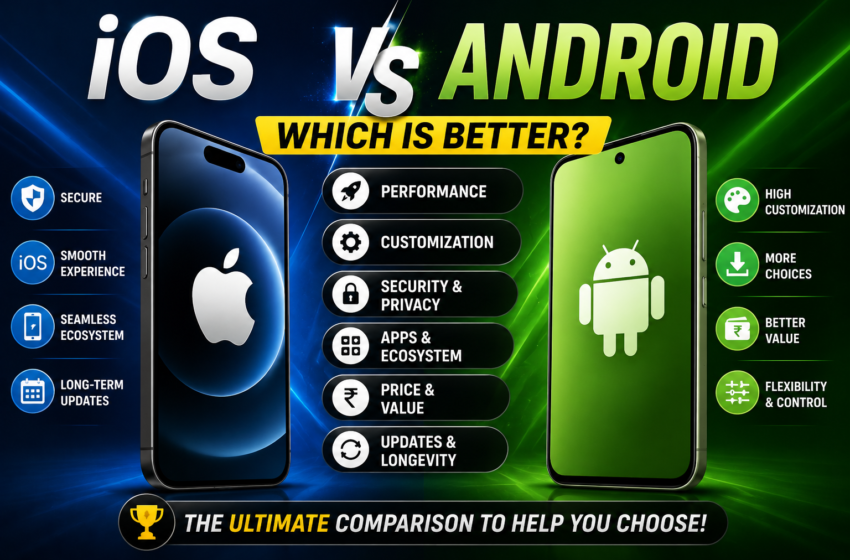
iOS vs Android is one of the most persistent tech battles in history. This debate has been running since 2008. Every year, someone publishes a definitive answer, and every year, millions of people type Android vs iOS into Google because the answer still isn’t obvious to them. That’s not because the comparison is complicated; it’s because the right answer genuinely changes depending on who’s asking.
A developer who wants to customize everything and pay less for hardware has a completely different right answer than a photographer who lives inside the Apple ecosystem and shoots professional video on their phone. Both can be correct simultaneously. So, let’s break down the real-world performance of Android vs iOS so you can spend your money wisely.
Android vs iOS: Quick Comparison (2026)
| Factor | Android | iOS |
| Starting Price | From £89 (budget) | From £699 (iPhone 16) |
| Customisation | Full system-level control | Limited, controlled experience |
| App Store | Google Play — open, wider range | Apple App Store — curated, stricter |
| Security Updates | Varies by manufacturer | 5–7 years guaranteed |
| Camera | Varies by device | Consistently class-leading on Pro models |
| Battery Life | Generally stronger | Improved but still behind flagships |
| Ecosystem | Google services, cross-platform | Apple-only, deeply integrated |
| Repairability | Easier and cheaper | More controlled, more expensive |
| Best For | Flexibility, budget range, customisation | Privacy, ecosystem, camera consistency |
What Is the Difference Between an iPhone and an Android?
The most fundamental answer to what is the difference between an iPhone and an Android comes down to one thing: who controls the software.
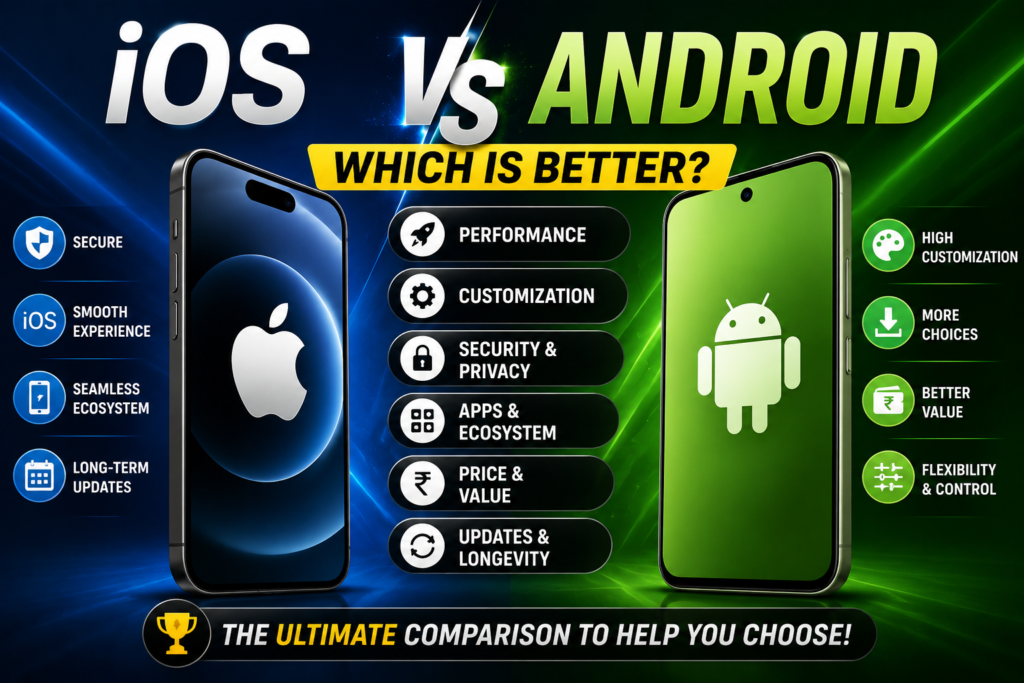
- Android is an open-source operating system developed by Google and used by dozens of manufacturers — Samsung, Google Pixel, OnePlus, Xiaomi, Motorola, and many more. That openness means Android runs on phones from £89 to £1,400, giving buyers an enormous hardware range at every budget level. It also means the software experience varies significantly between manufacturers — a Samsung Galaxy and a Google Pixel both run Android but feel noticeably different in daily use.
- iOS is a closed operating system that runs exclusively on Apple hardware, like iPhones designed and manufactured by Apple. There’s no iOS phone that isn’t an iPhone. Apple controls every layer of the experience (hardware, software, and services), which produces a more consistent, controlled environment and a fundamentally different relationship between the user and their device.
Everything else in the iOS vs Android comparison flows from that single structural difference.
Why Android Is Better Than iPhone
Android is better than iPhone for several specific reasons. They’re areas where Android’s structural advantages are genuine and meaningful.
Android vs iPhone Price: Which Is More Affordable?
Android covers every budget from under £100 to over £1,200. A £300 Android phone in 2026 runs fast, takes capable photos, and handles daily tasks without compromise. The cheapest new iPhone starts at £699. For buyers who want a capable smartphone without spending over half a grand, Android is the only realistic option.
Why Android is better than iPhone for customization
Android lets you change default apps, install custom launchers, sideload applications not in the Play Store, and adjust the interface at a system level. The iPhone locks you into Apple’s structure — you can move app icons around and change the wallpaper, but the system itself stays as Apple designed it. For tech-savvy users who want their phone to work the way they think rather than the way Apple decided, Android’s flexibility is a genuine quality-of-life advantage.
Android vs iPhone hardware variety comparison
Want a phone with a physical keyboard? A foldable screen? A 7-inch display? A phone specifically designed for gaming with cooling fans? A rugged model that survives construction sites? Android has all of those. iPhone is one design language in a few size options — excellent for buyers that design suits, limiting for everyone else.
Android vs iPhone compatibility with Windows and Google services
Android integrates naturally with Windows PCs, Google Workspace, and non-Apple services in a way that the iPhone consistently fights against. For people who don’t live inside the Apple ecosystem, Android is the less frustrating daily driver.
File management and flexibility in Android
Android treats itself like a computer — you plug it into a PC and drag files across like any storage device. iPhone requires iTunes or specific workarounds to do what Android handles natively.
Why iPhone Is Better Than Android
The case for iPhone in the Android vs iOS debate is equally strong, just different in character.
Why iOS is better for security and updates
Software support is the clearest iPhone advantage. Apple guarantees iOS updates for five to seven years after a phone’s release. Most Android manufacturers (Samsung excluded) provide two to four years of updates before dropping support. An iPhone 15 bought today will receive security patches and feature updates until approximately 2030. A mid-range Android from a smaller manufacturer might stop receiving updates by 2027.
Android vs iOS Security: Which Is Safer in 2026?
Apple’s App Store review process is stricter, malware rates on iOS are measurably lower, and Apple’s privacy labels give users clearer visibility into what each app collects. Tracking prevention across Safari and third-party apps is more aggressive on iOS than Android’s equivalent tools. For users who prioritise privacy above customisation, the iPhone’s closed ecosystem is a feature, not a limitation.
Apple ecosystem advantages (iPhone, Mac, iPad)
If you use a Mac, iPad, Apple Watch, and AirPods, an iPhone connects them in ways that feel genuinely seamless — AirDrop, Handoff, Universal Clipboard, and iMessage continuity across devices work in a way that Google’s equivalent cross-device tools haven’t replicated at the same level. The Apple ecosystem is the strongest lock-in in consumer technology, and for users already inside it, that lock-in is a benefit.
iPhone vs Android Resale Value: Which Holds Price Better?
A three-year-old iPhone resells for significantly more than a three-year-old Android flagship. An iPhone 13 from 2021 still commands £200–£300 in the secondhand market. The equivalent Samsung Galaxy from the same year typically sells for £100–£150. Over a four-year ownership cycle, the total cost gap between iPhone and Android narrows considerably when resale value is factored in.
iPhone vs Android Camera for Video: Which Is Better?
Video quality on iPhone Pro models is genuinely ahead. iPhone Pro camera systems (specifically the video capabilities) remain the benchmark for mobile filmmaking. Cinematic mode, ProRes recording, and log video capture make the iPhone 16 Pro the device of choice for professional content creators shooting on mobile.
Android vs iOS: Camera, Battery, Security and Customisation Compared
- Android vs iOS Camera Comparison (Which Is Better in 2026)
iPhone Pro models lead on video. Samsung Galaxy S26 Ultra leads on zoom and versatility. Google Pixel leads on computational photography and night mode. The best Android camera beats the best iPhone camera on specific tasks — but iPhone’s camera consistency across all lighting conditions is still the benchmark most reviewers use.
- Battery Life: Android vs iPhone Comparison
Android flagships generally carry larger batteries than comparable iPhones. The Samsung Galaxy S26 with a 4,900mAh battery consistently outlasts an iPhone 16 Plus in real-world testing. Apple’s battery efficiency improvements have closed the gap significantly since 2022, but Android still leads on raw battery life at comparable price points.
- Android vs iOS Security: Which Is Safer
iOS leads. Tighter App Store controls, faster security patch deployment, and stronger tracking prevention give iPhone a measurable security advantage over most Android devices. The exception is Google Pixel — which receives Android security patches faster than any other Android manufacturer and comes closest to iPhone’s security posture.
- Customisation: Android vs iOS Differences
Android leads, completely. iOS has added more customisation options with each recent update, like lock screen widgets, custom app icons, and more home screen flexibility, but it still operates within Apple’s boundaries. Android’s system-level customisation has no equivalent on iPhone.
Which Is Better — Android or iOS for Different Users?
| User Type | Best Choice | Why |
| Budget buyer under £400 | Android | iPhone doesn’t exist at this price |
| Privacy-focused user | iPhone | Stricter controls, fewer data risks |
| Heavy Apple ecosystem user | iPhone | Seamless device integration |
| Tech enthusiast/customiser | Android | System-level control and flexibility |
| Mobile content creator | iPhone Pro | Best-in-class video on mobile |
| Business user on Google Workspace | Android | Native integration without workarounds |
| Long-term software support | iPhone | 5–7 years vs 2–4 years typical Android |
| Frequent phone switcher | Android | Better resale flexibility, wider range |
Android vs iOS: Final Verdict (2026)
Which is better Android or iOS has the same answer it’s always had: it depends on you specifically, not on which platform is objectively superior.
Android wins on price range, hardware variety, customisation depth, and cross-platform flexibility. iPhone wins on software longevity, privacy, ecosystem integration, and resale value. Neither is wrong. Neither is for everyone.
The most useful framing is this: if you’re trying to decide between the two and your budget is under £500, Android is the answer by default. Above £700, the comparison becomes genuinely close and comes down to whether you value customisation and flexibility (Android) or consistency, privacy, and ecosystem depth (iPhone).
The phones that get the best reviews in any year aren’t always the most expensive ones,, they’re the ones that match the buyer’s actual usage pattern most accurately. Figure out that pattern first, then the platform decision makes itself.
Android vs iOS FAQs
Android vs iOS: Neither is universally better. The right choice depends on your budget, ecosystem, and usage. Android leads on price range, customisation, and hardware variety. iOS leads on software support longevity, privacy, and ecosystem integration. For budgets under £500, Android is the only realistic choice. Above £700, the right answer depends on how you use your phone.
Android is better than iPhone for buyers who want budget flexibility (phones from £89 to £1,400), deeper customisation at system level, a wider range of hardware form factors, and easier cross-platform compatibility with Windows PCs and Google services. Android’s open ecosystem suits users who want to work outside Apple’s controlled environment.
The core difference between an iPhone and an Android is software control. Android is open-source and runs on dozens of manufacturers’ hardware across every price point. iOS is closed and runs exclusively on Apple-designed iPhones. This structural difference drives everything else — price range, customisation depth, update consistency, and ecosystem integration.
Generally yes, iOS’s stricter App Store review process, faster security patch delivery, and stronger tracking prevention give iPhone a measurable security advantage over most Android devices. Google Pixel is the closest Android equivalent, receiving security patches as fast as iPhone and with the strongest privacy posture of any Android manufacturer.
Apple guarantees five to seven years of iOS updates after a phone’s release. Most Android manufacturers provide two to four years of updates — Samsung is the exception at seven years for Galaxy S and Z series from 2024 onward. For long-term software support, iPhone leads the market outside of Samsung’s recent commitment.
On specific tasks, like zoom photography, versatility, and computational photography — Android flagships like Samsung Galaxy S25 Ultra and Google Pixel 9 Pro match or exceed iPhone. On video quality and consistency across all lighting conditions, iPhone Pro models remain the benchmark. The best camera phone in 2026 depends on what you’re shooting rather than a single universal answer.
Switching makes sense if you value privacy, long software support, Apple ecosystem integration, or professional-grade mobile video. The switching cost is real — learning a new interface, potentially losing some Android-exclusive apps, and the higher entry price of iPhone hardware. Most people who switch and stay switched are those already using other Apple devices regularly.
Android flagship phones generally carry larger physical batteries and outlast comparable iPhones in real-world testing. Samsung Galaxy S25 series and OnePlus flagships consistently lead on battery life benchmarks. Apple’s efficiency improvements have narrowed the gap significantly since 2022, but Android leads on raw battery duration at comparable price points.
Last Updated on: September 11, 2026